
If you’re living with significant pain and discomfort from an orthopedic(musculoskeletal) condition, you know firsthand how much it can affect your quality of life. Seemingly simple tasks like walking, climbing stairs or evenstanding become much more difficult. On a positive note, our bone, joint and muscle specialists are here to get you moving again.
Laparoscopy is used in diagnosis when non-invasive methods can’t diagnose a condition, and surgeries performed are via small incisions, which increases postoperative patient recovery, reduces blood loss and pain, and significantly improve cosmesis.
Diagnosis options are offered through laparoscopy for Pelvic inflammatory disease (PID), Endometriosis, Ectopic pregnancy, Ovarian cyst, Fibroids, Female infertility, Undescended testicles, Appendicitis, Unexplained abdominal pain, Liver cancer, Pancreatic cancer, Ovarian cancer, Bile duct cancer, Gallbladder cancer
The removal of the gallbladder is a common procedure that is best performed through laparoscopic surgery. Depending on the nature of the case and laparoscopic equipment, up to 4 incisions of between 0.5-1 cm are made to perform a Cholecystectomy. The laparoscopic apparatus then allows the surgeon to drain the gallbladder and extracting it through the small incision. These small incisions heal much faster than traditional surgical incisions, allowing the patient to return home soon after surgery.
Your appendix is a narrow tubular finger-shaped organ attached to the intestines on the lower right side of your abdomen. It houses bacteria. When the appendix is blocked, it becomes inflamed and results in appendicitis. A ruptured appendix can allow the bacteria to spread to the other organs posing a risk to life. Laparoscopy is the best diagnostic and surgical procedure to detect appendicitis and remove it surgically at the same time.
Our Centre of Excellence for Laparoscopic Services houses the latest image-guided laparoscopy instrumentation and diagnostic equipment to enable our multidisciplinary team of gastroenterologists and laparoscopy technicians to perform an appendectomy on patients of all ages with equal ease.
When your gastroenterologist suspects appendicitis, he/she will put you through a few tests to diagnose it conclusively. Depending on the severity of the inflammation, and your medical history, he may suggest laparoscopic surgery to give you the option to choose this minimally invasive surgery for safer results. This is also a two-pronged advantage to probe the severity of appendicitis and cut it away to remove it.
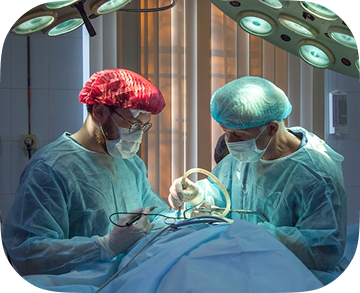
During a laparoscopic appendectomy, your surgeon will make a few keyhole-sized incisions in your abdomen. A small, narrow tube called a cannula will be inserted into one of the incisions to inflate your abdomen with carbon dioxide gas. This gas allows the surgeon to see your appendix. Once the abdomen is inflated, the laparoscope, which is a thin tube with a high-intensity light and a high-resolution camera at the end, will be inserted through the incision. The camera will beam the images on a monitor, allowing the surgeon to see inside your abdomen and guide the instruments. When the appendix is found, it will be tied off with stitches and removed. The small incisions are then cleaned, sutured, and dressed.
Laparoscopic surgery is often the best option for the elderly and the obese. It has fewer risks than an open appendectomy procedure, and a shorter recovery time hence a short hospital stay. However, if the appendix has ruptured, open surgery may be recommended.
Your gallbladder will need to be removed if the gallstones in it cause complications. The presence of gallstones is called cholelithiasis. Doctors may also recommend this type of surgery if you have – biliary dyskinesia, which occurs when the gallbladder doesn’t empty bile correctly due to a defect; pancreatitis or the inflammation of the pancreas is related to gallstones; cholecystitis or bladder inflammation; or choledocholithiasis which occurs when gallstones move to the common bile duct and block it, preventing the gallbladder and rest of the biliary tree from draining.
Your doctor will perform a complete physical examination and review your medical history before performing this procedure. This will also help minimize or prevent any risks. Through keyhole incisions in your lower abdomen, your doctor will insert the laparoscope and first locate the damaged gallbladder. With another tool inserted in another incision near the first one, he’ll cut the gallbladder away and remove it through the incision. The incisions will be stitched up with dissolvable sutures. You can go home the next day.
Whether you’ve been living with symptoms for a while or you’ve just started noticing muscle or bone pain, we can help pinpoint what’s ailing you:
There are many questions about the service, we have selected frequently asked questions about this service. If you do not see your answer, please contact us.
We always support in emergencies, contact us immediately if you are experiencing any serious health problems.
Support mail: info@harmonyhospital.in