If you’re living with significant pain and discomfort from an orthopedic(musculoskeletal) condition, you know firsthand how much it can affect your quality of life. Seemingly simple tasks like walking, climbing stairs or evenstanding become much more difficult. On a positive note, our bone, joint and muscle specialists are here to get you moving again.
After confirming stroke, a neurologist will prescribe a series of scans, tests, and examinations to identify the way a stroke has affected the neurological system. The standard battery of tests will include MRIs, CT scans, Ultrasound, blood draws, angiograms, and echocardiograms. These tests will shed light on the severity of the stroke as well as the likelihood of another stroke (clotting factor).
Continuous monitoring and regular checkups can help neurologists detect clots and clotting sources before they can cause additional strokes.
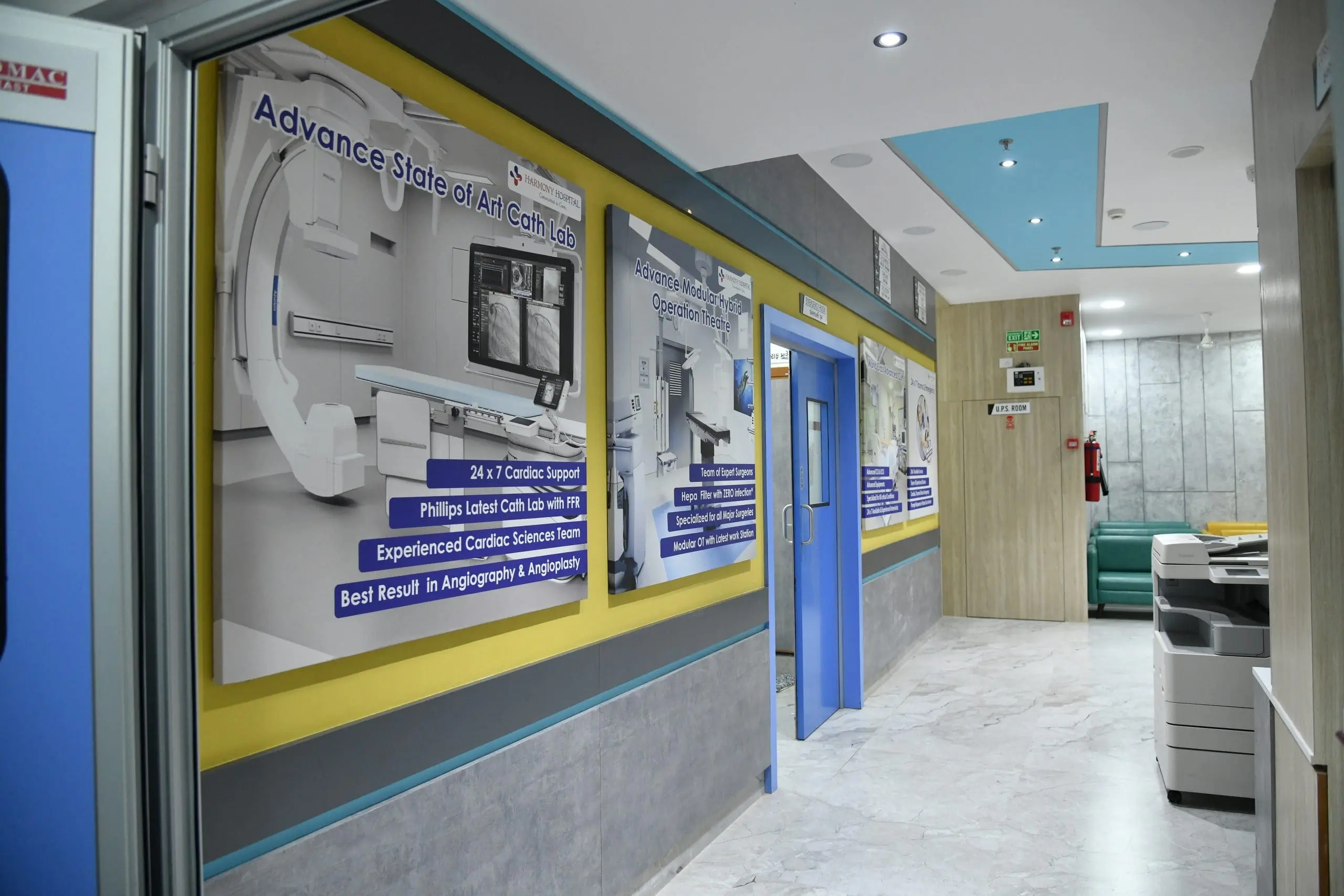
Whether you need to be admitted to our hospital for a serious neurological condition, or come in for a day procedure, our high precision diagnostic equipment helps our neurology team to prescribe the best mode of treatment. That’s why patients trust Harmony Hospital with precise diagnoses.
EEG or Electroencephalogram is a test that records the electrical activity of the brain and brain wave patterns.
Nerves control the muscles in the body by electrical signals and this impulse makes the muscles react in specific ways. NCS or Nerve Conduction Study is a non-invasive test that measures how well and how fast the nerves can send electrical signals.
EMG or Electromyography is an invasive diagnostic procedure to assess the health of muscles and the nerve cells that control them (motor neurons). EMG results can reveal nerve dysfunction, muscle dysfunction, or problems with nerve-to-muscle signal transmission.
Alzheimer’s disease is a progressive disease of the brain that is characterized by dementia or loss of memory, behavioral changes, and loss of cognitive thinking, which eventually becomes severe affecting everyday simple tasks. The disease is named after Dr. Alois Alzheimer who was the first person to notice some brain tissues changes like amyloid plaques (abnormal clumps) and neurofibrillary (tangled bundles of fibers) in a woman who died of an unusual mental illness.
If you are concerned about your memory or other thinking skills then consult the best hospital for Alzheimer’s disease treatment in Ahmedabad, Gujarat.
Treatment of Alzheimer’s disease mainly focuses on slowing the disease progression, and management of cognitive impairment, and improving the patient’s quality of life.
If you are looking for the best hospital for Alzheimer’s disease treatment in Ahmedabad then consult Harmony Hospital, Ahmedabad.
Our brain and spinal cord are surrounded by a fluid called cerebrospinal fluid. Lumbar puncture is a procedure in which the doctor collects a sample of cerebrospinal fluid which can be tested in the lab for diseases of the brain and spinal cord.
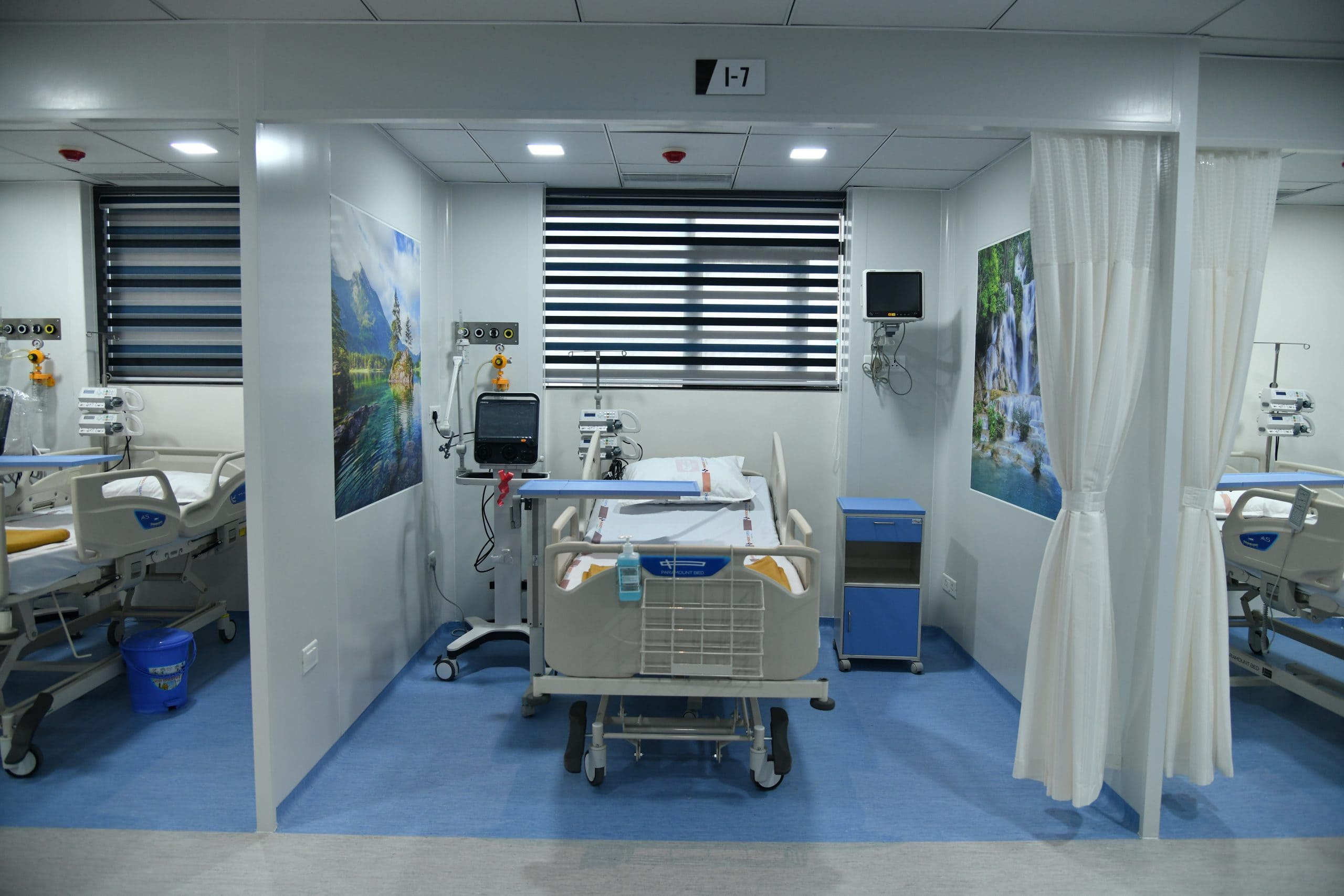
Patients suffering from brain trauma or disease that requires round-the-clock monitoring and care are admitted into neurointensive care. The neuro ICU has a team of neurological specialists and nurses that are trained and experienced in providing intensive care to patients. They are equipped to detect and treat several neurological disorders at a moment’s notice (stroke, brain hemorrhage, etc.)
This is a science that is concerned with how the brain and the rest of the nervous system influence a person’s cognitive skills and behaviors. More importantly, neuropsychologists mostly focus on how injuries or illnesses of the brain physically affect the cognitive functions and behaviors in patients.
Some of the common neurological disorders are the spinal cord, muscular dystrophy, myasthenia gravis, epilepsy, and even insomnia.
We offer a complete range of neurology care including Lumbar Puncture, Tensilon Test, Electroencephalogram, Electromyography, and Sleep Study. A lumbar puncture popularly known as a spinal tap is a procedure to collect and examine the fluid surrounding the brain and the spinal cord to find the cause of infections, inflammation, cancer, or bleeding around the area surrounding the spinal cord or brain.
Most strokes are acute and typically start suddenly and worsen rapidly. Sometimes a stroke may be preceded by a transient ischemic attack (TIA), a temporary stroke that reverses itself before it causes any lasting effects.
The dedicated premium lab at Harmony Hospital is equipped with powerful diagnostic instruments. The Electrophysiology lab boasts of high precision Electroencephalogram (EEG), video telemetry and Electromyography (EMG) scans. An electroencephalogram (EEG) is a test that measures and records the electrical activity of the brain. Here, electrical sensors are attached to the patient’s head and the wires connected to a computer. The computer then records the brain’s electrical activity on paper or the monitor. The EMG on the other hand measures muscle response or electrical activity in response to a nerve’s stimulation of the muscle. This test helps detect neuromuscular abnormalities. During the test, one or more small needles (also called electrodes) are inserted through the skin into the muscle.
The human mind is an intricate web of emotions, thoughts, and behaviors. Similarly, the brain operates through electric signals that influence our actions. This intriguing combination is what our immensely talented neurologists and neuropsychologists at Harmony Hospital handle daily.
This is a syndrome where there is deterioration in memory, thinking, behavior, and the ability to perform everyday activities. It also affects their language skills and problem-solving ability. Although dementia chiefly affects older people, it is not considered a normal process of aging.
Epilepsy is a chronic neurological disorder in which brain activity becomes abnormal, causing seizures or periods of unusual behavior, sensations, and sometimes loss of awareness. Anyone can develop epilepsy. You are diagnosed with epilepsy if you have one or two unprovoked that were not caused by some known and reversible medical condition like alcohol withdrawal or extremely low blood sugar. Sometimes, the epileptic seizures may be related to a brain injury or a family history of it.
Mobility is not always an orthopedic condition. The brain controls our movements and any anomaly in the brain functions can affect the ability to move.
Sleep is essential for rest for our brain which is active throughout the day. Sleep deprivation can cause a whole lot of neurological disturbances and also be life-threatening. Some of the common sleep disorders that need medical guidance and attention include Insomnia, Sleep Apnea, Restless leg Syndrome, REM Sleep Behavior Disorder, Narcolepsy, Sleepwalking, Sleep Terrors, and Bruxism (Teeth Grinding).
Most of us would have had a headache at some time or the other without causing any serious impact. However, there are different types of headaches that are not always caused by traffic jams or noise pollution. Headaches that are accompanied by fever, stiff neck, confusion, decreased alertness or memory, or neurological symptoms such as visual disturbances, slurred speech, weakness, numbness, or seizures need attention.
This is a chronic autoimmune disease that affects the central nervous system, especially the brain, spinal cord, and optic nerves, leading to several symptoms throughout the body. It causes the inflammation of the myelin sheath that surrounds and protects the nerve fibers which transmit electric signals, leading to scarring on the damage of the sheath. They mainly affect the brain stem, the cerebellum, which coordinates movement and controls balance, the spinal cord, the optic nerves, and white matter in some regions of the brain.
Neurological rehabilitation involves strategies to improve function, reduce symptoms and improve the wellbeing of people with diseases, trauma, or disorders of the nervous system that include brain and spinal cord injury.
Whether you’ve been living with symptoms for a while or you’ve just started noticing muscle or bone pain, we can help pinpoint what’s ailing you:
There are many questions about the service, we have selected frequently asked questions about this service. If you do not see your answer, please contact us.
We always support in emergencies, contact us immediately if you are experiencing any serious health problems.
Support mail: info@harmonyhospital.in