
Laparoscopic surgery is not universally better than open surgery. It is better suited to specific conditions and patients, while open surgery remains the right choice for certain complex or emergency cases. The right method depends on your diagnosis, not on which technique sounds more advanced.
In this guide, you will get a clear comparison of both methods, understand who is and is not a suitable candidate for each, see real differences in cost and recovery in India, and learn the right questions to ask your surgeon before making a decision.
This guide is written for patients preparing for a planned procedure where both options may be on the table.
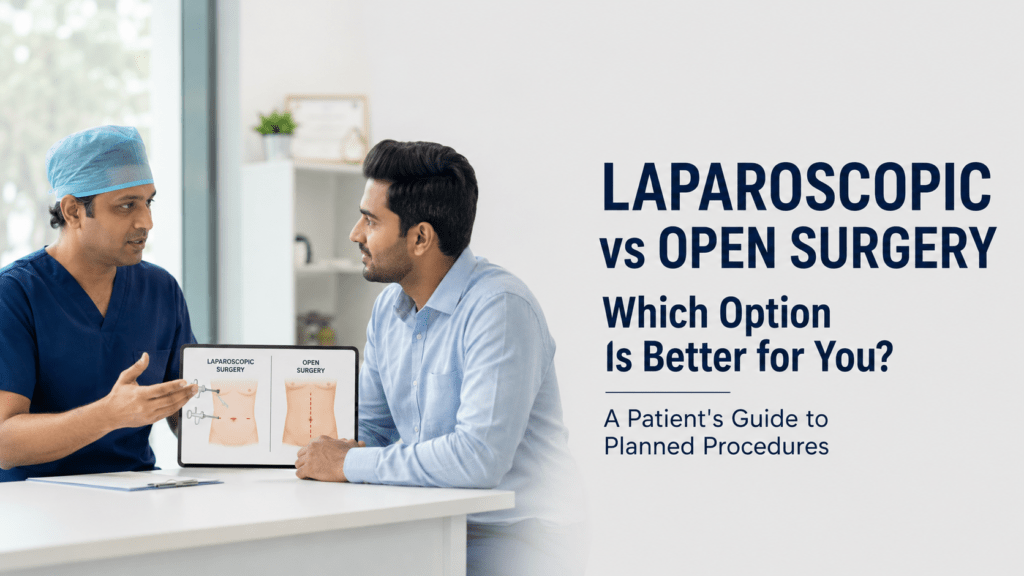
Table of Contents
What Laparoscopic and Open Surgery Actually Involve
Before comparing outcomes, it is important to understand what each surgical method involves in practical terms. This clarity helps you interpret recovery timelines, risks, and why your surgeon may recommend one approach over the other.
How Laparoscopic Surgery Is Performed
Laparoscopic surgery is designed to minimise physical trauma to the body without compromising surgical precision.
The procedure is performed through small incisions, typically measuring between 0.5 to 1 centimetre. A laparoscope, a thin, flexible tube with a high-resolution camera, is inserted through one of these incisions. This camera transmits real-time images to a monitor, allowing the surgeon to operate with a magnified internal view.
Additional small incisions are used to introduce specialised surgical instruments. To create adequate working space, the abdomen is gently inflated with carbon dioxide gas. This step improves visibility and allows precise movement of instruments without the need for a large opening.
Because the procedure is guided through a screen rather than direct line-of-sight, it requires specific training and experience, but enables highly controlled, minimally invasive intervention.
How Open Surgery Is Performed
Open surgery follows a more traditional approach, where a single, larger incision is made to directly access the area being treated. The size and placement of this incision depend entirely on the type and complexity of the procedure.
This method allows the surgeon to see and handle organs and tissues directly, without relying on camera-assisted visuals. It provides complete exposure of the surgical field, which can be essential in complex, advanced, or unclear cases.
Direct access also enables quicker adjustments during surgery, particularly when dealing with unexpected findings or complications.
Why the Word “Better” Misses the Real Question
The question “is laparoscopic surgery better than open surgery” often leads patients toward a simplified conclusion that does not reflect medical reality.
The more relevant question is: which method is more appropriate for your condition?
Each approach has distinct advantages and limitations. The right choice depends on factors such as the nature of the disease, its stage, your medical history, and the level of access required for safe and effective treatment.
Understanding this distinction helps shift the focus from choosing the “latest” technique to choosing the safest and most suitable one for your case.
Laparoscopic Surgery Advantages Patients Should Know
In an appropriate clinical context, laparoscopic surgery provides distinct, evidenced-based benefits, benefiting recovery, comfort, and surgical experience.
Smaller Incisions and Reduced Scarring
One of the most obvious and conspicuous ways these two types of surgery differ is the size of the incisions.
Laparoscopic procedures involve several small incisions rather than one large incision. This means that there will be a lot less scarring. This isn’t just about the cosmetic look, it’s also about the decreased trauma to the skin and surrounding tissues for many patients.
Shorter Hospital Stay in Most Cases
The procedure is a less invasive one, and patients usually recover from the initial surgery faster.
The hospital stays for laparoscopic surgery are typically 1-3 days depending on the surgery and the patient’s condition. Sometimes, the patient can even be discharged within 24 hours. Patients are less likely to suffer from hospital acquired infections and can return home sooner.
Lower Blood Loss During the Procedure
Laparoscopy is carried out with more precision and under controlled access and usually has less blood loss during surgery.
Smaller incisions and the sophisticated nature of surgical techniques minimize the risk for extensive bleeding and blood transfusion and related complications.
Reduced Post-Operative Pain Levels
Having less tissue disruption, less pain after surgery.
Laparoscopic procedures are associated with less pain for the patient than open surgery. This may lead to less reliance on strong pain relievers, quicker mobility and overall more comfortable recovery.
The benefits make many patients wonder, laparoscopic vs open surgery, which is safer. In most and uncomplicated cases, the safety profile of laparoscopic surgery is favourable, but suitability is always dependent on the case.
Open Surgery Advantages Patients Should Know
Despite the growing preference for minimally invasive techniques, open surgery continues to play a critical role in safe and effective treatment.
Direct Access for Complex or Unclear Cases
Open surgery provides unrestricted access to the surgical area, allowing the surgeon to directly see and handle tissues and organs.
This level of access is particularly important in complex procedures, cases involving large tumors, or situations where the exact extent of disease is not fully clear before surgery. It enables more thorough evaluation and precise decision-making during the procedure.
Faster Option in Genuine Emergencies
In emergency scenarios, time is a critical factor.
Open surgery is often the fastest way to gain immediate access to internal structures, especially in cases such as trauma, internal bleeding, or organ rupture. It eliminates the setup time required for laparoscopic equipment and allows rapid intervention when every minute matters.
In such situations, the priority is not minimally invasive access, but the ability to act quickly and effectively to stabilise the patient.
For Whom Laparoscopic Surgery Is Not Good?
Although there are numerous benefits associated with laparoscopy, this procedure may not be suitable for all patients. There are various clinical aspects that dictate the suitability of surgery and, in some cases, the traditional surgical procedure is better.
Extensive Scar Tissue From Previous Surgeries
Patients who have undergone prior abdominal or pelvic surgeries may develop adhesions, which are bands of internal scar tissue.
These adhesions can make it difficult to safely navigate laparoscopic instruments and may obscure visibility. In such cases, the risk of accidental injury to surrounding organs increases, making open surgery a more controlled and safer option.
Severe Obesity Affecting Surgical Access
In patients with severe obesity, the thickness of the abdominal wall and internal fat distribution can limit both visibility and instrument mobility during laparoscopic procedures.
This can make precise surgical movements more challenging and may increase operative time or complication risk. Open surgery may be recommended when it allows better access and control.
Advanced or Widespread Disease
Conditions such as advanced-stage cancers or widespread infections often require broader access to multiple areas within the abdomen.
Open surgery enables the surgeon to thoroughly assess the extent of disease and perform more extensive procedures when required. In these cases, a minimally invasive approach may not provide sufficient access for safe and complete treatment.
Certain Heart and Lung Conditions
Laparoscopic surgery requires the abdomen to be inflated with carbon dioxide gas, a process known as insufflation.
This can place additional pressure on the diaphragm and affect breathing and blood circulation. Patients with significant heart or lung conditions may not tolerate these physiological changes well, making open surgery a safer alternative.
In these scenarios, the decision is not about preference but about ensuring that the chosen surgical approach aligns with the patient’s safety and overall medical condition.
What Happens When Laparoscopic Surgery Converts to Open?
This is an important aspect patients should clearly understand before surgery.
Why Conversion Happens During Surgery
If the surgeon encounters unexpected bleeding, poor visibility, dense adhesions, or anatomy that makes the laparoscopic approach unsafe to continue, switching to open surgery mid-procedure is a planned safety protocol, not a failure.
How Often Conversion Happens and What It Means for You
Conversion rates vary depending on the procedure but are generally low for routine surgeries. Patients are informed beforehand that conversion is a possibility, and consent forms typically include this scenario.
Understanding can laparoscopic surgery convert to open surgery helps set realistic expectations and reduces anxiety if the plan changes during the operation.
Recovery Time Differences Between the Two Methods
Recovery is one of the most practical concerns for patients choosing between these approaches.
Laparoscopic Recovery Timeline
Most patients return to light daily activities within a few days to a week. Full recovery typically takes 2 to 4 weeks, depending on the procedure.
Open Surgery Recovery Timeline
Recovery after open surgery is longer due to larger incisions and greater tissue involvement. Patients may need 4 to 8 weeks or more before returning to normal activities.
Why Internal Healing Still Takes Time Either Way
Even when external healing appears faster, internal tissues still require time to recover. Patients should follow medical advice regardless of the surgical method.
When comparing laparoscopic surgery recovery time vs open surgery, laparoscopic approaches are generally faster, but individual outcomes vary.
Cost Comparison for Indian Patients
Cost is a significant factor for many patients considering planned procedures.
Why Laparoscopic Surgery Often Costs More Upfront
Laparoscopic procedures require specialized equipment, advanced instruments, and trained surgical teams. These factors contribute to higher initial costs.
How Shorter Recovery Can Offset the Difference
Shorter hospital stays, faster return to work, and reduced need for post-operative care can offset the higher upfront cost in some cases.
Insurance Coverage Considerations in India
Most insurance providers in India cover both laparoscopic and open procedures if medically indicated. However, coverage limits, co-payments, and hospital category can affect the final out-of-pocket expense.
When evaluating laparoscopic surgery cost vs open surgery India, patients should consider total cost rather than just the surgical fee.
Questions to Ask Your Surgeon Before Deciding
A well-informed discussion with your surgeon is essential.
Questions About Why One Method Is Recommended
Ask why a specific approach is suggested for your condition. Understand whether both options are viable and what factors influence the recommendation.
Questions About Recovery and Risk
Discuss expected recovery time, potential complications, and how your medical history may affect outcomes. This helps you make a realistic and informed decision.
Understanding the risks of laparoscopic surgery compared to open helps balance expectations and avoid assumptions.
Final Guidance for a Smooth Recovery
The choice between laparoscopic and open surgery is not about which method is better in general, but which is more appropriate for your specific medical condition. Factors such as diagnosis, anatomy, overall health, and surgical complexity play a decisive role in determining the right approach.
A well-informed patient should expect a clear explanation of why a particular method is recommended rather than a default preference. At Harmony Hospital, both laparoscopic and open surgical options are carefully evaluated before making a recommendation, ensuring that patient safety and outcomes remain the priority.
FAQs:
When is open surgery better than laparoscopic?
Open surgery is usually better for complex, widespread, or unclear conditions, like large tumors, advanced cancers, or severe infections that need direct access for complete treatment. It’s also preferred in emergencies like internal bleeding or trauma, where speed and full visibility matter most.
Is laparoscopic surgery safe for all patients?
Laparoscopic surgery is safe for many routine procedures, but not everyone. Past abdominal surgeries, severe obesity, or heart and lung issues can raise risks, and some patients can’t tolerate the gas used to inflate the abdomen. Safety is judged case-by-case based on health history and surgical complexity.
Why would a surgeon choose open surgery?
Open surgery is recommended when it gives better control, visibility, and access, especially for removing large masses or handling complex anatomy. It may also be chosen if laparoscopic methods are riskier or unsafe. The goal is always the best outcome, not just picking one technique.
Who is not a candidate for laparoscopic surgery?
Patients with extensive internal scar tissue from past surgeries, advanced disease, or certain heart and lung conditions may not be suitable for laparoscopic surgery. Severe obesity can also limit how well the instruments work. If imaging shows the condition can’t be safely managed through small incisions, open surgery may be the better choice from the start.
How to decide between laparoscopic and open surgery?
This decision should be made with your surgeon, based on your diagnosis, health, and the procedure itself. Ask whether both options are possible for you, and what the expected outcomes, risks, and recovery look like. A good choice relies on medical reasoning, not the idea that one method is always better.