Heart blockage is a narrowing of the arteries that builds up over years. A heart attack is a sudden event that happens when that blockage cuts off blood flow completely. One is a condition, the other is an emergency.
This guide will make you fully understand the heart blockage vs heart attack difference, how the two are connected, what tests can detect blockage early, how much blockage is dangerous, and what immediate steps to take if a heart attack is suspected.
This guide is meant to help you recognise the difference early enough to take action, not just understand it later. It matters because many people still wonder if heart blockage is the same as a heart attack, and getting that answer wrong can have serious consequences for survival.
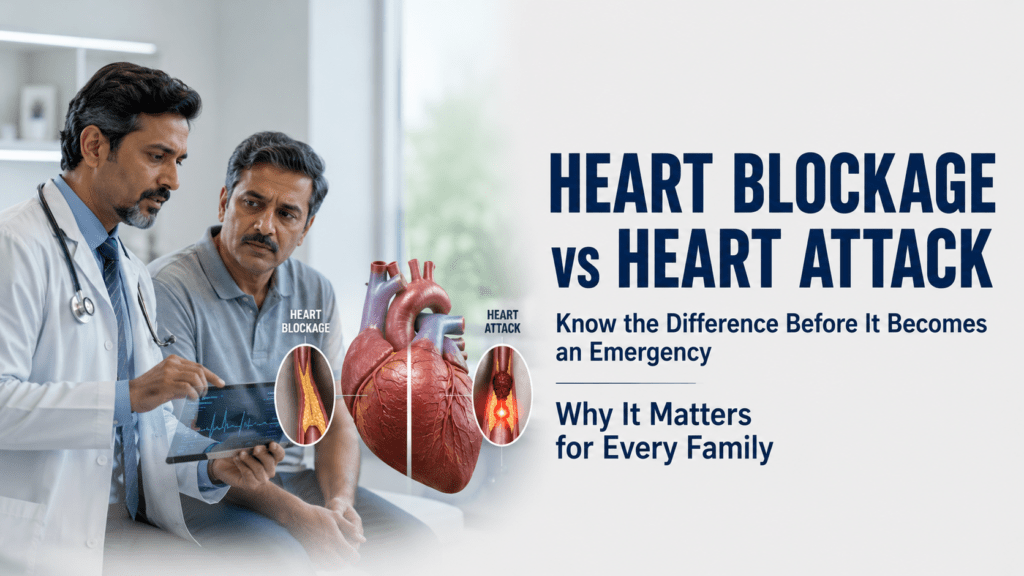
Table of Contents
What Heart Blockage Actually Is ?
Heart blockage is a medical condition where the coronary arteries become narrowed due to the gradual buildup of fatty deposits called plaque. This process, known as atherosclerosis, reduces blood flow to the heart muscle over time.
How Plaque Builds Up Inside the Arteries?
Plaque is made up of cholesterol, fat, calcium, and other substances present in the blood. Over years, these deposits stick to the inner walls of arteries, making them narrower and less flexible.
As the narrowing increases, the heart receives less oxygen-rich blood, especially during exertion. This is the foundation of how heart blockage leads to heart attack if left untreated.
Globally, cardiovascular diseases account for nearly 32% of all deaths, with coronary artery disease being the leading cause.
Why Blockage Can Exist Without Any Symptoms?
Many patients are surprised to learn that significant heart blockage can exist without clear symptoms. The answer to the question, can you have heart blockage without a heart attack, is yes.
The body can adapt by forming collateral circulation, which are small alternate blood vessels that help maintain blood flow. Because of this, the early signs of heart blockage before a heart attack are often mild, easy to miss, or completely absent.
Some individuals may experience fatigue, mild chest discomfort, or breathlessness, but these are frequently ignored. Cases of silent heart blockage symptoms no chest pain are not uncommon, especially in diabetic patients.
How Much Blockage Is Considered Dangerous?
Blockage severity is typically described in percentages. Less than 50% is considered mild, 50–70% is moderate and usually requires monitoring, and anything above 70% is classified as severe.
Many patients ask if 50 percent heart blockage is dangerous. The answer depends on several factors, including symptoms, the location of the blockage, and overall risk profile.
More importantly, risk is not determined by percentage alone. The stability of the plaque plays a critical role. Even smaller blockages can rupture and trigger a heart attack. This is why the level of blockage that needs treatment is not the same for every patient and must be assessed in the full clinical context.
What a Heart Attack Actually Is?
A heart attack, medically known as myocardial infarction, is a sudden and life-threatening event. It occurs when blood flow through a coronary artery is abruptly blocked, cutting off oxygen to a part of the heart muscle.
The Exact Moment a Blockage Becomes an Attack
A heart attack usually begins when a plaque within the artery ruptures. This rupture triggers the formation of a blood clot, which can quickly and completely block blood flow.
This highlights the key difference between a blocked artery and a heart attack. A blocked artery develops gradually over time, while a heart attack is a sudden and complete obstruction of blood flow.
Why Heart Attacks Happen Without Warning?
Many heart attacks occur without clear warning signs because plaque rupture is unpredictable. Even individuals with moderate blockage may experience a sudden event if the plaque becomes unstable.
This is why regular screening and risk assessment are essential, particularly for those with underlying risk factors.
What Happens to the Heart Muscle During an Attack?
When blood flow stops, the affected part of the heart muscle begins to die within minutes due to lack of oxygen.
Permanent damage can begin within 20–30 minutes. The longer the delay in treatment, the greater the damage, which can lead to complications such as heart failure or death.
How Heart Blockage and Heart Attack Are Connected?
Heart blockage and heart attack are not separate diseases. They represent different stages of the same underlying condition.
Blockage Is the Cause, Attack Is the Consequence
Heart blockage develops gradually over time, whereas a heart attack occurs when blood flow is suddenly interrupted. Understanding how heart blockage leads to a heart attack is key. Plaque buildup creates the risk, and when that plaque ruptures, it triggers the event.
Why Some People With Severe Blockage Never Have an Attack?
Not everyone with severe blockage will experience a heart attack. In many cases, the plaque remains stable and is less likely to rupture. In addition, the body may develop alternative pathways for blood flow through collateral circulation.
This is why blockage severity alone does not always predict outcomes. The nature of the plaque and the body’s ability to adapt both play an important role.
Heart Blockage, Heart Attack, Cardiac Arrest, and Heart Failure Compared
These terms are often used interchangeably, but they describe very different conditions. Understanding the heart blockage vs cardiac arrest difference is especially important in emergencies.
Heart Blockage Is a Structural Condition
It refers to narrowed arteries caused by plaque buildup. It develops slowly and can exist silently.
Heart Attack Is a Sudden Blood Flow Event
It occurs when a blockage suddenly stops blood flow, causing damage to the heart muscle.
Cardiac Arrest Is an Electrical Failure
Cardiac arrest happens when the heart suddenly stops beating due to an electrical malfunction. It requires immediate resuscitation.
Heart Failure Is a Long-Term Pumping Problem
Heart failure is a chronic condition where the heart cannot pump blood effectively, often as a result of previous heart damage.
Recognising the Warning Signs of Each
The ability to differentiate between an active heart attack and a developing blockage can be improved by understanding the symptoms patterns.
Signs That May Point to Underlying Blockage
- Chest discomfort during exertion
- Shortness of breath
- Fatigue
- Pain in the neck, jaw, or shoulder
These may represent early signs of heart blockage before attack.
Signs of an Active Heart Attack in Progress
- Severe chest pain or pressure
- Pain spreading to arm, jaw, or back
- Sweating and nausea
- Sudden shortness of breath
Immediate medical attention is critical in such cases.
Why Symptoms Often Differ in Women?
Women are more likely to experience atypical symptoms such as:
- Fatigue
- Indigestion-like discomfort
- Dizziness
This often delays diagnosis and treatment.
Early detection plays a crucial role in preventing emergencies, because heart blockage often develops silently long before symptoms become severe. Identifying narrowing in the arteries at the right time allows doctors to intervene early and reduce the risk of a heart attack.
ECG and Stress Test as First-Line Screening
Electrocardiograms (ECG) are usually the first step in evaluating heart health. They record the electrical activity of the heart and can indicate irregular rhythms or signs of reduced blood flow. However, since blockage may not always show up at rest, doctors often recommend a stress test alongside it.
During a stress test, the heart is monitored while the patient walks on a treadmill or takes medication that simulates exertion. This helps reveal how the heart performs under pressure and can uncover hidden circulation issues that may not be visible in a resting ECG.
CT Angiography for a Detailed Artery View
CT coronary angiography is a non-invasive imaging test that provides a detailed, three-dimensional view of the coronary arteries. It helps detect plaque buildup, narrowing, and even early-stage blockages that have not yet caused symptoms.
This test is especially useful for patients with moderate risk factors, as it offers clarity without the need for a catheter-based procedure.
Coronary Angiography as the Definitive Test
Coronary angiography remains the gold standard for diagnosing heart blockage. In this procedure, a thin catheter is inserted through a blood vessel and guided to the heart, where contrast dye is used to clearly visualize the arteries on imaging.
It allows doctors to accurately measure the degree and location of blockage in real time. More importantly, if a significant blockage is found, treatment such as angioplasty or stent placement can often be performed during the same procedure.
If you are trying to understand how to know if you have heart blockage, these tests provide the most reliable answers and help guide timely, life-saving decisions.
Why Heart Attack Risk Is Higher in Indian Patients
India carries a disproportionately high burden of heart disease, and this makes the heart blockage vs heart attack difference even more important for early intervention. Studies consistently show that Indians are up to 2–3 times more likely to develop coronary artery disease compared to Western populations, often with more aggressive progression and fewer early warning signs.
Genetic Predisposition Among Indian Populations
South Asians have a known genetic tendency to develop atherosclerosis earlier in life. This includes a higher likelihood of smaller coronary arteries, increased visceral fat, and a metabolic profile that promotes plaque buildup. Even individuals who appear physically fit may carry underlying risk due to these inherited factors, making routine screening especially important.
Younger Average Age for Heart Attacks in India
One of the most concerning patterns is that heart attacks in India occur at a younger age. On average, patients experience cardiac events 5–10 years earlier than their Western counterparts. It is not uncommon to see cases in individuals in their 30s or 40s, which shifts the need for awareness and preventive care much earlier in life than many people expect.
Diabetes and Lifestyle Factors Common in Urban India
India has one of the highest rates of diabetes globally, and this significantly accelerates artery damage. Along with this, urban lifestyles often include long hours of sitting, low physical activity, high stress levels, and diets rich in refined carbohydrates and unhealthy fats.
These combined factors not only increase the likelihood of developing blockage but also make it more likely to progress silently. In many cases, the first sign of a problem is a heart attack itself, which reinforces the importance of early testing and risk assessment.
What to Do If You Suspect a Heart Attack Right Now
Recognising symptoms quickly and acting immediately can save lives.
Call Emergency Services Immediately
Do not wait to confirm symptoms. Immediate medical assistance is critical.
What to Do While Waiting for Help
- Stay calm and seated
- Loosen tight clothing
- Chew aspirin if advised by a doctor
- Avoid physical exertion
Every minute counts during a heart attack.
Managing Blockage to Prevent a Future Attack
Once blockage is detected, treatment focuses on preventing progression and reducing risk.
Medication and Lifestyle Management for Moderate Blockage
Doctors may prescribe:
- Cholesterol-lowering drugs
- Blood thinners
- Blood pressure medications
Lifestyle changes include diet modification, exercise, and smoking cessation. Many patients explore heart blockage treatment without surgery in India, especially in early or moderate cases.
When Angioplasty or Bypass Becomes Necessary
Severe blockages may require:
- Angioplasty with stent placement
- Coronary artery bypass surgery
The choice depends on blockage severity, location, and overall health.
Final Guidance for a Smooth Recovery
Figuring out the heart blockage vs heart attack difference changes how patients respond to symptoms and risk. The former is developed gradually without any warning signs while the latter requires immediate attention and intervention. Early identification of blockage through tests guarantees good results but timely recognition of the symptoms of a heart attack can save one’s life. This means that these two problems are stages of the same illness.
Our cardiologists and emergency department specialists of Harmony Hospital are prepared for treating patients in all stages of the disease.
FAQs:
-
What is the difference between heart blockage and a heart attack?
Heart blockage is the gradual narrowing of coronary arteries from plaque buildup over time, often staying silent for years. A heart attack is a sudden emergency that happens when a narrowed artery becomes fully blocked, cutting off blood flow to part of the heart muscle.
-
Can you have heart blockage without having a heart attack?
Yes, it’s quite common to have heart blockage without ever having a heart attack. Many people live with partial blockages that don’t fully stop blood flow, and the body can sometimes build alternate paths for circulation. But even without a heart attack, an untreated blockage still raises long-term risk and needs medical check-ups and care.
-
How much heart blockage is considered dangerous?
Blockages above 70% are usually seen as severe and often need treatment, while 50–70% may just need close monitoring. Even smaller blockages can turn risky if the plaque is unstable. Overall risk also depends on symptoms, where the blockage is, and conditions like diabetes or high blood pressure.
-
What are the early symptoms of heart blockage?
Early signs can include mild chest discomfort during activity, shortness of breath, unusual tiredness, or pain in the neck, jaw, or shoulders. Some people, especially those with diabetes, may feel no chest pain at all. That’s why routine screening matters for early detection, even without obvious symptoms.
-
What tests detect heart blockage before a heart attack?
Initial screening often includes an ECG or a stress test to check how the heart works during exertion. If more detail is needed, a CT coronary angiogram gives a clear, non-invasive look at the arteries. Coronary angiography is the most definitive test, pinpointing blockages exactly and helping guide treatment.
-
What should I do if I think I am having a heart attack?
If you suspect a heart attack, act fast. Call emergency services right away, stay seated and calm while you wait, and avoid any exertion. Quick action improves survival and lowers long-term heart damage.