
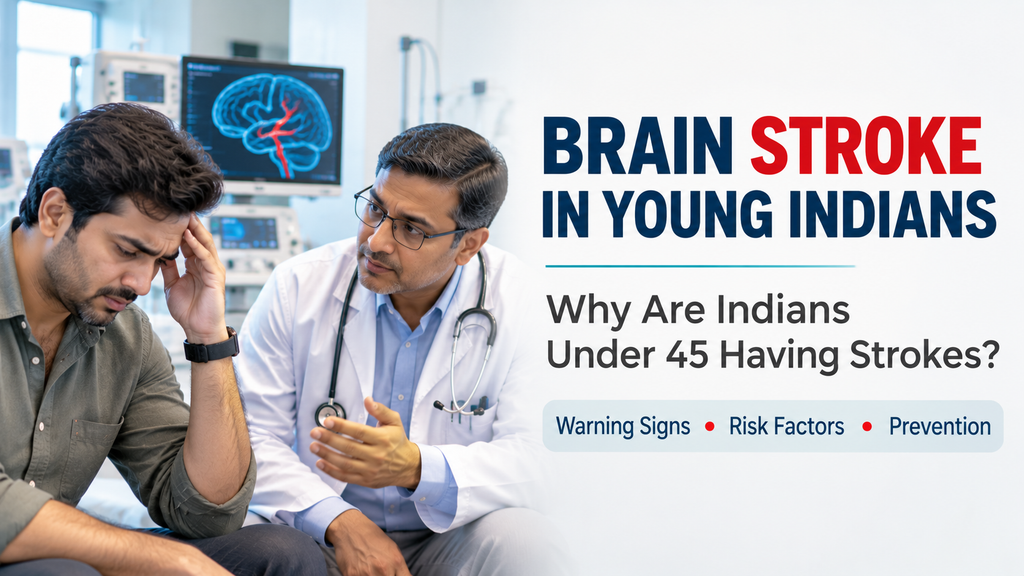
Brain stroke is commonly thought to be related to ageing. This belief can pose a danger to the younger generation. A stroke can also happen to adults in their 20s, 30s, or early 40s without any known history of illness.
There is even more reason to be concerned about this matter given India’s stroke data. A study published in 2026, based on the ICMR National Stroke Registry Programme, analysed 34,792 stroke cases from 30 hospitals across the country. It determined that 13.8% of the registered patients were younger than 45 years. In simple terms, almost 15% of patients in this hospital registry were young adults.
Leading risk factors included high blood pressure, tobacco use, and diabetes. There were also cases where patients did not reach the hospital in time for treatment to be effective.
What is the reason why brain stroke in young age is becoming a serious health concern? What makes healthy Indians vulnerable? And how can someone identify a stroke before it has done any permanent damage?
Let’s learn why, how, and what to do that can make a difference.
Table of Contents
Can Young Adults Really Have a Brain Stroke?
Yes. Brain stroke can affect people of any age. It is caused by a restriction in blood flow to part of the brain or by a ruptured blood vessel in the brain.
Brain cells need a constant supply of oxygen and nutrients. If blood does not flow, these cells start to be damaged. The longer the interruption, the more at risk of permanent brain injury.
Young onset stroke is typically defined as occurring between 18 and 45 years of age (or 18 and 50 years of age in some studies).
Younger people may not have the typical risk profile seen in older patients. Some may have high blood pressure or diabetes that has gone undetected. Some may suffer from heart diseases, blood-clotting disorders or blood vessel defects.
Early diagnosis is important because this will make it easier to control the condition. The doctor needs to diagnose the stroke, as well as the medical condition that caused it.
Why Brain Stroke in Young Age Is Becoming a Concern in India
India faces a growing burden of conditions such as hypertension, diabetes, and obesity. The same issues are presenting in younger adults, too.
Long working hours, lack of physical activity, irregular eating habits, and smoking can contribute to the risk. The lack of health checks is also partly due to the fact that many people feel they are healthy or do not think that serious illness is likely to happen at their age.
Some important lessons are learnt from the ICMR hospital registry:
- 13.8%: Share of registered stroke patients below 45 years.
- 74.5%: Patients who had hypertension.
- 28.5%: Patients who used smokeless tobacco.
- 27.3%: Patients who had diabetes.
- 20.1%: Patients who reached the hospital within 4.5 hours of symptom onset.
These are based on 34,792 patients treated at 30 hospitals from 2020-2022. They refer to the registered patients and not the actual distribution of all strokes in India among the entire population.
The results nevertheless raise two significant issues. Many patients lose valuable treatment time before reaching a hospital, and risk factors are often out of control.
What Are the Causes of Brain Stroke in Young People?
No single cause of stroke in younger adults. Some causes are due to daily routines, others are due to medical conditions.
Knowing the risk factors for brain stroke in young people can help identify risks prior to an emergency.
1. High Blood Pressure
Hypertension is the most significant risk factor for stroke in India.
Persistently high blood pressure causes harm to the walls of blood vessels. These vessels can be weak or thin or more likely to burst.
This may result in an ischaemic stroke (when blood is blocked) or a haemorrhagic stroke (when the blood leaks into the brain).
But the issue is that high blood pressure sometimes has no symptoms at all. Some people might not feel any different even though their blood pressure is dangerously high.
It is important to monitor regularly even in your 20’s and 30’s.
2. Diabetes and High Cholesterol
Diabetes is a condition that is related to how the body uses the energy in the blood. High blood sugar can cause blood vessels to get damaged over time and causes heart and blood vessel disease.
The high LDL cholesterol can also cause the formation of plaque within the arteries. This reduces the blood’s ability to circulate and can help cause blood clots.
Having a family history of diabetes, high cholesterol or heart disease should be a reason for young adults to be mindful of regular checks on their health.
3. Smoking, Gutkha and Tobacco Consumption
Tobacco smoking is a serious problem in India. It consists of cigarettes, bidis, chewing tobacco, gutkha and other smokeless tobacco products.
Nicotine causes an increase in both blood pressure and strain on cardiovascular system. Tobacco also weakens the walls of blood vessels, and causes abnormal clotting.
These effects can make people more vulnerable to stroke, even if they don’t have any other health problems.
The most important thing a young adult can do to help protect their blood vessels is to quit using tobacco.
4. Obesity and Physical Inactivity
Sitting for long periods of time, lack of physical activity, and eating too many high-calorie foods can lead to weight gain.
Too much salty food, too much refined carbohydrates, too much fried food and too much sugary beverages can also be found in Indian food. Regularly consuming these foods can increase the risk of obesity, diabetes and high blood pressure.
Extra weight places extra stress on the cardiovascular system. It may also lead to sleep apnoea, which is linked to higher cardiovascular risk.
A lack of physical activity adds to the problem.
5. Excessive Alcohol and Drug Use
Excessive drinking can lead to high blood pressure and to abnormal rhythms of the heart. Both can be a cause of stroke.
Some recreational drugs, such as cocaine and amphetamines, can trigger rapid rises in blood pressure and constriction of the blood vessels. They can also lead to an increased chance of bleeding or clot stroke.
People with long histories of substance use are not the only ones who are at risk.
6. Heart Conditions and Abnormal Heart Rhythms
A stroke can originate in the heart, not the brain.
Atrial fibrillation can lead to blood accumulating in the heart and the formation of blood clots. A clot can travel in the blood and block blood vessels to the brain.
Some structural cardiovascular diseases may also promote the passage of clots into the circulation to the brain.
An example of this is a patent foramen ovale (PFO). A small opening between the right and left upper heart chambers which does not completely close after birth. It is seen in the general population and most people who have PFO do not have a stroke. But it may be explored if a stroke occurs in a young person without a known cause.
7. Blood-Clotting Disorders and Genetic Conditions
Some individuals are born with a tendency to clot. Others suffer from clotting disorders as a result of autoimmune disorders or some type of medical condition.
These disorders can make it more likely for blood clots to develop in blood vessels leading to the brain.
Another vital condition in India is cerebral venous thrombosis (CVT). When a clump of blood prevents blood from flowing through a vein back to the brain. It may occur in younger adults and can lead to headache, seizures or other neurological manifestations.
In India, some factors have been identified as risk factors for CVT including anaemia and raised homocysteine. The cause is different for each patient.
8. Pregnancy and Hormonal Factors
It is not that women are at higher risk of stroke during or after pregnancy than at any other time of their lives, but that there are some extra risks to watch for.
The cardiovascular system is altered by pregnancy and increased demands are put on blood clotting. Other risk factors for stroke during pregnancy include severe pregnancy-related hypertension and pre-eclampsia.
Some hormonal contraceptives can be associated with the risk of blood clots, especially if used with smoking and/or migraine with aura or other risk factors.
This does not apply to all women who are using hormonal contraception. Medication prescriptions and changes should be based on individual risk assessment by a doctor.
9. Migraine and Artery Dissection
There is an association between migraine with aura and increased risk of ischemic stroke. Before or during a migraine, there could be temporary changes in vision (Aura).
A less-known cause is injury to the cervical arteries. When a tear forms in the inner lining of an artery in the neck. Blood may accumulate in the wall of the artery, constrict it, and cause clots to develop.
It can be after a neck injury or an abrupt neck movement, but it can also happen without a specific injury.
Acute, progressive neck pain or headache with neurological symptoms should be immediately evaluated.
What Are the Two Main Types of Brain Stroke?
Knowing the type of stroke can help you to understand how symptoms and treatment may be different.
Ischemic Stroke
Ischemic stroke is caused by a blood clot in an artery that leads to the brain. It causes congestion or occlusion of blood to the affected area.
This could occur when a clot forms in an artery in the brain or if the clot gets carried from another part of the body, such as the heart.
This is the most common type of stroke. About 60% of ischemic strokes were reported in the Indian hospital registry.
Haemorrhagic Stroke
In a haemorrhagic stroke, the blood vessel bursts and the blood spills into or onto the brain.
The bleeding compresses the surrounding brain tissue and injures the brain cells. The risk can rise due to uncontrolled high blood pressure and weakened blood vessels.
Both types are medical emergencies. They seem to be treated in different ways, and doctors need to pinpoint the type by urgently imaging the brain.
What Are the Stroke Symptoms in Young Adults?
Young adults and older individuals have similar symptoms of stroke. The main difference is that younger patients and their families may not recognise them as signs of a stroke.
Most symptoms come on quickly. They may include:
Drooping face: Sudden weakness or unevenness of one side of the face.
Arm weakness – One arm is weak, numb or hard to lift.
Speech problems: Words become slurred or may be difficult to hear.
Rapid vision changes: Vision in one or both eyes rapidly changes to blurred vision or loss of vision in one or both eyes.
Loss of balance: Sudden dizziness, difficulty walking or loss of coordination occurs.
Sudden very severe headache: A sudden headache, which is very severe, may occur, especially in a haemorrhagic stroke.
Keep in mind the FAST Method
It’s important to remember the FAST Method. The FAST method helps identify the most common warning signs of stroke.
F – Face: Ask the person to smile. Does one side droop?
A – Arms: Ask them to raise both arms. Does one arm fall or feel weak?
S – Speech: Ask them to repeat a simple sentence. Is their speech unclear?
T – Time: Call emergency medical services immediately.
Don’t wait for symptoms to go away. Never assume that the person is just tired, stressed or suffering from a migraine.
Transient ischaemic attack (TIA), also known as a mini-stroke, can result in brief stroke symptoms. These symptoms can go away in minutes or hours. The signs of a stroke are evident in a TIA, and a medical evaluation is urgently needed.
How Is Brain Stroke Diagnosed in Young People?
The first step in determining a stroke and its type is for doctors to confirm the stroke occurred. They then explore the cause that might be suggested.
The tests can involve:
CT scan of the brain: This helps detect bleeding or other critical abnormalities of the brain. One of the initial investigations when a stroke is suspected.
MRI of the Brain: MRI is able to give detailed images of the brain’s tissue. It can help detect areas with poor blood flow or other abnormalities.
CT or MR Angiography: These tests look at the blood vessels of the brain and neck. They can be useful in determining blockages, narrowing or dissection of arteries.
Blood Tests: Physicians can perform laboratory tests on the blood to look for blood sugar, blood cholesterol, blood counts, and blood clotting parameters. If they suspect that the patient is suffering from a clotting condition or autoimmune disorder, further testing is required.
ECG and Echocardiography: These tests are used to help diagnose abnormal heart rhythms or heart abnormalities that could have led to a clot moving to the brain.
In younger patients, there may be a need for a more detailed evaluation to find the cause. This is important because treatment of the first stroke may not help stop a second stroke.
What Should You Do If Someone Has a Stroke?
The first few hours after a stroke can influence the patient’s recovery. If treatment is needed, prompt medical care may help doctors determine how to treat the person and minimize additional brain injuries.
If a person exhibits sudden stroke symptoms:
Contact Emergency Medical Services (EMS) right away. In India, dial 112 or the local ambulance emergency number.
Record the exact time of onset of symptoms or the last time that the person was seen well.
Avoid feeding, watering, or administering oral medications. After a stroke, a person’s ability to swallow may be affected.
Aspirin should not be administered unless prescribed by a doctor. A brain scan will rule out bleeding.
Avoid waiting for symptoms to get better or using home remedies.
Seek a hospital that is prepared to quickly evaluate and treat a stroke victim.
Why Every Minute Matters
Brain imaging is used to help the doctor find out if the stroke is caused by a blockage or bleeding.
Clot-dissolving medications are used in a narrow window of time (usually up to 4.5 hours of having symptom onset) for patients who qualify as having an ischemic stroke. For those patients who have major vessel occlusion, mechanical thrombectomy (clot removal) may be indicated. This procedure can be performed up to 24 hours after the patient has been reported as “last known well.”
The treatment for haemorrhagic stroke is different. Control of blood pressure, treatment of pressure inside the skull and in selected patients surgery may be used.
Treatment will depend on the type of stroke, whether the blood vessel is involved, imaging results, and the patient’s condition. The sooner patients arrive at hospital the more options doctors have.
How Can Young Indians Reduce Their Risk of Brain Stroke?
Not all strokes can be prevented. Others are associated with various medical issues such as heart problems and other abnormalities or genetic disorders. However, if there are known risk factors, these can be controlled to reduce the overall risk.
Here are some things that young adults can do.
Check blood pressure regularly. Don’t wait for headaches or other symptoms. HBP can go undetected for years.
Keep an eye on blood sugar and cholesterol. As directed by your doctor, have a test if you have risk factors or a family history.
Limit salty and processed foods. Reduce foods with high sodium content like packaged snacks, pickles, papads, and processed meats. Eat more vegetables, fruits, whole grains, and homemade meals.
Stay physically active. Get at least 150 minutes of moderate-intensity exercise per week (if healthy). Regular walking, cycling, swimming, and other exercises can help.
Stop smoking and smoking tobacco. Do not smoke, chew gutka or chew tobacco. No type of tobacco use is safe.
Limit alcohol. Resist excess drinking and do not drink too much; if you find it hard to control your drinking, make sure you get help.
Take sleep seriously. Keep to a consistent bedtime schedule. If you have trouble breathing at night, wake up gasping, and feel sleepy during the day, consult your doctor.
Monitor and review current medical conditions. Never overlook diabetes, heart rhythm disorders, migraines with aura, or existing clotting disorders. Follow the instructions for taking prescribed medicines.
Don’t dismiss the confusing symptoms. If weakness, vision issues, speech difficulties or undeniable headaches occur suddenly, seek medical help.
These actions can be helpful even when you don’t feel unwell. The first step in preventing illness is to take steps before you get sick.
How Harmony Hospital Supports Timely Medical Care
The brain is not the only body part involved in stroke. It may affect a person’s ability to walk, work, and engage in normal activities and communication. The effect for the young patient can reach into family duties, career goals and financial security.
When the diagnosis comes at the right time, and the treatment is the proper one, it is important at all stages.
We know how vital timely emergency care and dependable diagnostic assistance are at Harmony Hospital, Ahmedabad. Our 24-hour emergency service ensures that patients are able to get immediate medical care when it’s needed. Patient-first care, communication, and timely and appropriate medical advice are our priority.
If one of you or a family member has sudden stroke symptoms, call for emergency medical help right away. Wait for symptoms to calm down or delay treatment due to age cannot be done.
Conclusion
Old age isn’t the time for a brain stroke. Be it a young professional, a homemaker, a parent or a seemingly healthy person, it can affect anyone.
The first one is to not take “age” for granted. Take a blood pressure reading. Control diabetes. Avoid tobacco. Be aware of any unusual symptoms. If you think someone may have had a stroke, act fast!
Similar risk factors, including high blood pressure, diabetes, tobacco use and obesity, help explain why young Indians are getting heart attacks too.
The most important lesson is to stop treating age as protection.
The course of treatment can change within a few minutes. Timely intervention and timely access to appropriate medical treatment can prevent brain dysfunction and maximize recovery.
Meet Our Neurology and Neurosurgery Specialists at Harmony Hospital
Timely diagnosis and the right medical expertise are important in stroke care. At Harmony Hospital, Ahmedabad, our specialists bring experience in neurology, stroke management and neurosurgery to support patients through diagnosis and treatment.
Dr. Jaydeep Mangroliya
Epilepsy and Neuro-Cognition Specialist
- MBBS, MD (Medicine), DM (Neurology)
- 12 years of experience
Dr. Jatin Lathiya
Neurologist | Stroke and Headache Specialist
- DNB (Neurology)
- 5+ years of experience
Dr. Piyush Patel
Neurosurgery Specialist
- MS, MCh (Neurosurgery)
- 15 years of experience
Their expertise covers important areas of neurological and surgical care. If you experience sudden stroke symptoms, seek emergency medical attention immediately. Do not delay treatment while waiting for a specialist appointment.
FAQs:
Why do people under the age of 45 suffer from brain stroke?
Younger adults can suffer from stroke due to high blood pressure, diabetes, smoking, heart disease or blood-clotting disorders. Genetic and/or hormonal causes also play a role in some cases.
Can a healthy person have a brain stroke?
Yes. An individual can be suffering from an undiagnosable heart problem, a clotting disorder or a blood vessel irregularity. There are also strokes that can occur for no apparent reason.
What are the first signs of a stroke in young adults?
Common signs include sudden droop in facial muscles, arm weakness and a difficulty in speech. Other symptoms include sudden vision changes, dizziness, and loss of balance.
Can stress cause a brain stroke at a young age?
Stress alone is not considered a direct cause of every stroke. Stress can, however, lead to elevated blood pressure, sleeping problems and unhealthy coping behaviors that can raise the risk of stroke if it lasts too long.
Can a brain stroke happen during sleep?
Yes. Someone can have a stroke during their sleep and wake up with other neurological symptoms and/or weakness. This needs urgent assessment in the Emergency room.
Can young adults fully recover from a brain stroke?
Recovery is possible, but it depends on the stroke’s severity, the affected brain area, treatment timing, and rehabilitation. Proper and prompt treatment and consistent rehabilitation can help improve outcomes.