

Often, persistent bloating is blamed on gas, acidity, or just eating habits.
It usually begins small: a feeling of fullness after eating, a tightness in your stomach, or just a sense that your stomach is more full than usual. Over time, it may start to show up more often, last longer, affect appetite, or make everyday comfort difficult. Most people try quick fixes like antacids or home remedies, thinking it is temporary.
But if bloating keeps coming back, doesn’t go away easily, or starts to get in the way of daily life, it could be your body telling you something deeper needs to be looked into.
A global survey by the Rome Foundation Global Epidemiology Study found that close to 18 percent of individuals deal with it weekly. Women tend to notice it much more – their numbers nearly double those of men.
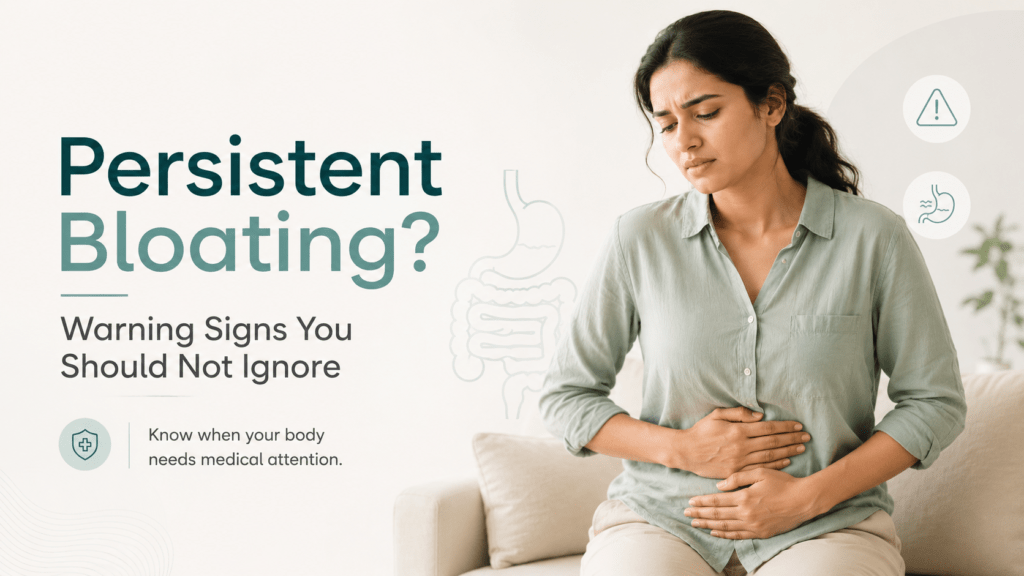
Though many reasons behind bloating can be handled easily, ignoring it time after time isn’t wise when the real source stays unclear. Treating symptoms alone might miss what’s actually going on underneath.
Table of Contents
What is Persistent Bloating?
Bloating is when there is a feeling of abdominal fullness, pressure, tightness, or swelling for a long period of time. For some, the abdomen may be visibly swollen, and in others, it may cause pain internally.
Persistent bloating typically means:
- Bloating that occurs frequently,
- Lasts for several days or weeks,
- Continues to return or reappear despite diet changes or medication.
If bloating occurs regularly after eating, it may indicate digestive dysfunction, food intolerance, hormonal imbalance, or a gastrointestinal disease.
Symptoms of Constant Bloating
Persistent bloating rarely appears alone. It is usually accompanied by other digestive symptoms that help us identify the underlying issue.
Common symptoms associated with persistent bloating include
- Tight or swollen abdomen
- Excessive gas or burping
- Feeling full quickly while eating
- Abdominal discomfort or cramping
- Constipation or diarrhea
- Frequent acidity-like symptoms
- Nausea after meals
- Visible abdominal distension
In many patients, these symptoms fluctuate for months before they seek medical attention.
What Can Be the Cause of Persistent Bloating?
There is no single reason behind chronic bloating. Multiple digestive and lifestyle factors can contribute to it.
Irritable Bowel Syndrome (IBS)
IBS is one of the most common causes of chronic bloating throughout the world. It has an impact on gut motility and sensitivity and may cause:
- Bloating,
- Abdominal pain,
- Constipation,
- Diarrhea, or
- Alternating bowel habits.
Studies from India estimate the prevalence of IBS to be between 4% and 7% in the general population, but symptoms are often underdiagnosed, as many individuals normalize digestive discomfort.
Constipation and Slow Digestion
Long-term storage of stool in the intestines causes gas to build up and cause pressure inside the abdomen.
Llifestyle habits such as:
- Low fiber intake,
- Dehydration,
- Sedentary work culture,
- Irregular meals,
- And late-night eating
have significantly increased constipation-related bloating in urban populations.
Food Intolerances
Many people experience bloating after consuming:
- Milk,
- Wheat,
- Fried foods,
- Processed foods,
- or Artificial sweeteners.
Lactose intolerance is especially important in Indian populations because symptoms often overlap with IBS and acidity. Recent Indian research found lactose intolerance in 38% of IBS patients studied.
Gut Microbiome Imbalance
Your digestive system contains trillions of bacteria that help break down food. When this balance is disrupted due to:
- Antibiotics,
- Infections,
- Stress,
- or Unhealthy eating habits,
It can increase fermentation and gas production inside the gut.
Stress and Gut-brain Connection
Stress has a direct effect on digestion.
The gut and brain communicate constantly through neural and hormonal pathways. Chronic stress can:
- Poor digestion,
- Worsen gas retention,
- Increase gut sensitivity, and
- Cause IBS symptoms.
That’s why many people find their bloating gets worse during periods of anxiety or irregular routines.
Hormonal Changes
Persistent bloating is especially common in women due to hormonal fluctuations linked with:
- Menstruation,
- PCOS,
- Menopause,
- and Thyroid disorders.
However, bloating that becomes persistent or progressively worse should still be medically evaluated rather than assumed to be hormonal alone.
Why are the Cases of Persistent Bloating Increasing in India?
Digestive complaints are on the rise in India, especially in urban areas.
There are a few lifestyle factors associated with the increase in persistent bloating:
- High intake of processed and fatty foods,
- Irregular eating schedules,
- Fast eating habits,
- Increasing stress levels,
- Poor sleep,
- Low physical activity,
- and Self-medication by the use of antacids.
Persistent bloating is also often mistaken for “normal gas” and many patients treat themselves for months without ever finding out what is causing the problem.
Patients are often diagnosed years after they have come to see the doctor for symptoms. Long-standing bloating symptoms have been linked to many disorders, such as IBS, food intolerance, chronic constipation, fatty liver disease, and gut microbiome imbalance.
Temporary Bloating vs Persistent Bloating
| Temporary Bloating | Persistent Bloating |
| Happens occasionally after meals | Occurs repeatedly |
| Improves within hours | Lasts days or weeks |
| Usually linked to overeating | Often linked to digestive disorders |
| Mild discomfort | Ongoing heaviness, pain, or fullness |
| Improves with simple remedies | Keeps returning despite treatment |
When to Worry About Bloating?
One of the most asked questions that we get from patients is
When should I worry about bloating?
The answer is not as simple as it might seem and will vary according to frequency, severity, and symptoms associated with it.
It is normal for some bloating to happen after meals, especially when consumed in large quantities. However, if it continues to cause ongoing bloating, it should not be ignored if it is impacting appetite, bowel movements, comfort, or life.
If bloating is coupled with any of the following, get an evaluation:
- Unexplained weight loss,
- Blood in stool,
- Chronic constipation or diarrhea,
- Severe abdominal pain,
- Vomiting,
- Fever,
- fatigue,
- Loss of appetite,
- Or having a feeling of fullness with extremely little food.
Such symptoms can be a sign of disease and should be appropriately investigated.
When does Bloating Become a Serious Problem?
Bloating becomes a serious concern when:
- It is ongoing and worsening,
- Does not respond to dietary modifications, or
- Is associated with systemic symptoms.
Sometimes chronic bloating can be linked to:
- Inflammatory bowel disease,
- Celiac disease,
- Severe IBS,
- Ovarian conditions,
- Liver disease, or
- Gastrointestinal tumors.
That’s not to say bloating is always a sign of something serious. However, any recurring or unexplained symptoms should never be taken for granted without proper evaluation.
Why Bloating Is Often Mistaken for Acidity
This is especially common in India.
Many patients repeatedly use:
- antacids,
- digestive powders,
- soda-based remedies,
- or over-the-counter medications
assuming the problem is acidity.
But acidity and bloating are not always the same.
Acidity usually causes:
- Chest burning,
- Sour burps,
- or Reflux symptoms.
Persistent bloating, on the other hand, often relates more to:
- Digestion speed,
- Gut bacteria,
- Constipation,
- Food intolerance,
- or Bowel disorders.
Repeated self-medication may temporarily suppress symptoms while delaying proper diagnosis.
How Doctors Diagnose Persistent Bloating
To understand the root cause, you need to do more than just suppress the symptoms.
Doctors may suggest the following, depending on the patient’s history:
- Blood tests,
- Stool analysis,
- Ultrasound,
- Endoscopy,
- Colonoscopy,
- Thyroid evaluation, and
- Breath tests for food intolerance and bacterial overgrowth.
At Harmony Hospital, a team of gastroenterologists, internal medicine physicians, diagnosticians, and nutritionists collaborate to evaluate persistent digestive symptoms. This helps to determine whether bloating is associated with functional digestive disorders, lifestyle factors, or an underlying medical condition that requires treatment.
Treatment Options for Persistent Bloating
The first step is to identify the cause of the bloating, as it is important to address the issue slowly before using temporary solutions.
Making simple lifestyle adjustments can make a difference for many people, such as eating meals on schedule, eating slowly, and avoiding foods that commonly lead to discomfort. In some cases, there may be specific food intolerances or sensitivities, and these must be carefully identified and not guessed.
Lifestyle also makes a significant contribution. Better digestion can help to ease symptoms; stress, poor sleep, and lack of movement can impede digestion.
If bloating persists or is associated with other conditions such as IBS or constipation, treatment may be necessary to help control digestion and to treat the underlying cause.
The emphasis at Harmony Hospital is on figuring out why the bloating is occurring and dealing with it in a manner that will offer a long-lasting remedy – not just a short-term respite.
When to Visit a Hospital for Bloating
Many people wait months or even years to see a doctor about digestive symptoms.
If you should see a doctor:
- Bloating keeps coming back,
- Symptoms are becoming more frequent,
- Home remedies are no longer effective, or
- Your quality of life is being impacted.
Early assessment often can identify tractable causes before the symptoms become more complex.
Those with ongoing bloating are offered a full digestive health assessment at Harmony Hospital to help not only relieve the symptoms temporarily, but find and treat the root cause of the symptoms.
Final Thoughts
Bloating that sticks around might not mean danger – yet no one should keep facing it like it’s normal. Body signals matter when they won’t quit.
Heavy feelings now and then might hint at something more beneath – maybe trouble digesting certain foods, unseen stress messing with your gut, or quiet signs of a lasting stomach issue.
Spotting what’s behind it sooner helps calm things down before they stick around too long.
When belly bloat shows up too often, talking to a doctor might open the door to real change instead of quick fixes. Digestive wellness could finally take root once answers start coming.
FAQs:
1. Does stress cause bloating?
It is true that stress may cause bloating due to the relationship between your gut and brain. Stress may affect how your body digests food; therefore, you may experience accumulation of gases in the body causing bloating. People suffering from sensitive gut diseases such as IBS are likely to suffer from bloating under stress.
2. How do I get rid of bloating even though I’m eating nutrition food?
Even with a nutritious diet, bloating could occur when one’s body is intolerant to certain kinds of food, suffers from sensitive intestines, and diseases like IBS. Some healthy foods such as dairy products, gluten, or fiber-rich foods might not be suited for everyone.
3. Could you feel a bloated stomach when you suffer from IBS?
Yes, bloating is one of the most common symptoms of IBS. This usually comes together with other symptoms such as pain in the abdominal region, cramps, and constipation or diarrhea. This bloating usually manifests through fullness in the abdominal region, which could become severe after eating.
4. When to see a doctor about bloating?
You should consult a doctor if bloating persists for more than 2–3 weeks, occurs frequently, or is associated with symptoms like pain, unexplained weight loss, or changes in bowel habits. Early evaluation helps rule out underlying digestive or medical conditions.
5. Why does bloating occur more at night than the rest of the day?
The problem tends to worsen at night as there is accumulation of gases during the process of digestion as a result of eating all day long. The process of digestion gets slower during the evening, which results in bloating.
6. Is bloating a serious symptom of constipation?
Yes, bloating is a common symptom of constipation. When stool builds up in the intestines, it can cause gas accumulation, abdominal distention, and discomfort. Treating constipation through diet, hydration, and activity can help relieve bloating.