
Cancer is no longer a rare diagnosis. More people are hearing the word “oncology” earlier than ever before because more people are learning about it and better ways to find it. But to many, the question still remains simple – what is oncology in cancer treatment, and how does it benefit the patient?
Oncology isn’t merely about treating cancer. It is all about the entire process, including detection, diagnosis, treatment, rehabilitation, and long-term care. Having knowledge about oncology can help patients and their loved ones make better choices during critical moments.
Learning about oncology is no longer a choice; it’s necessary for timely action, better results, and smart decisions.
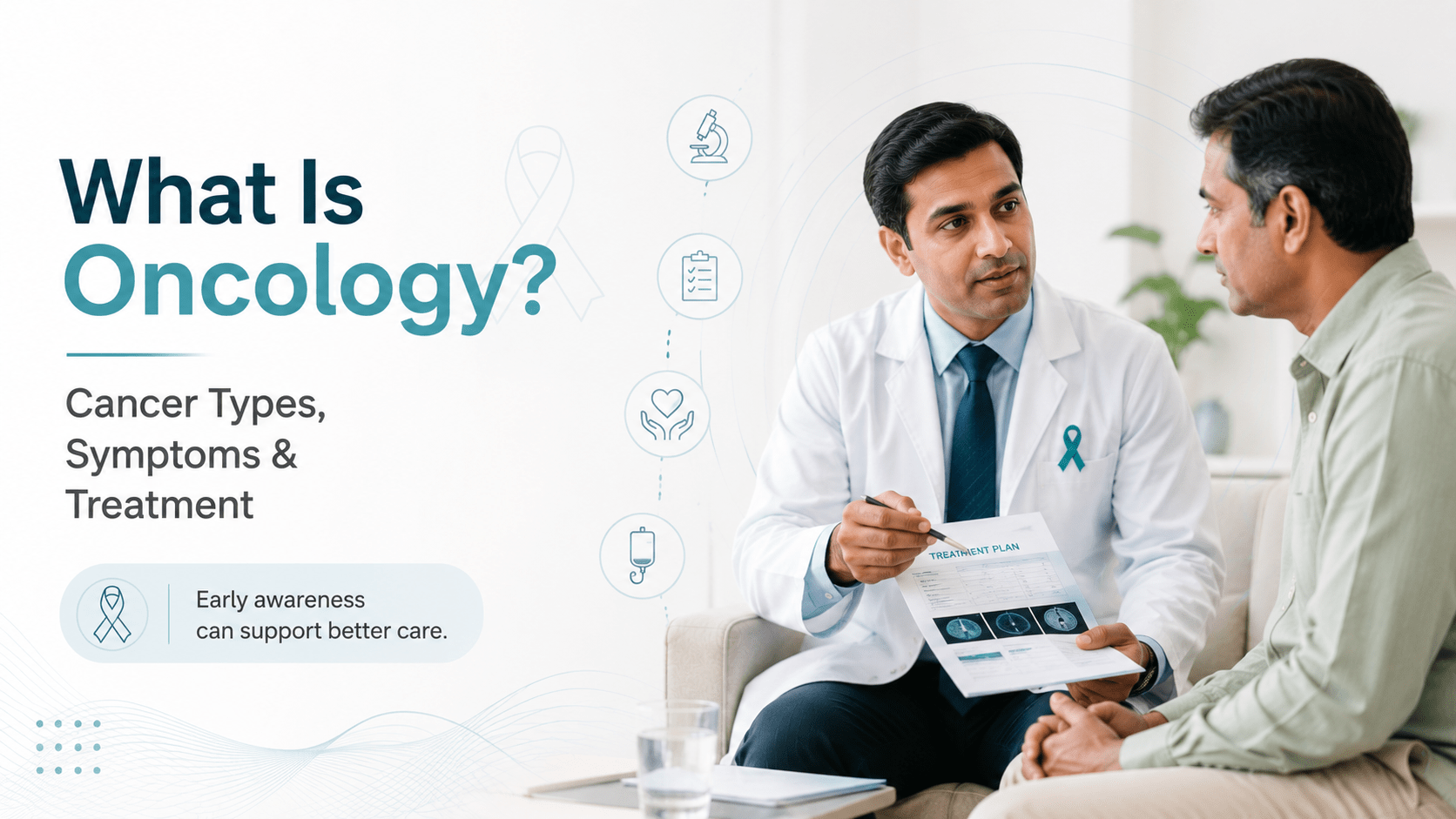
Table of Contents
What is Oncology?
Oncology is the branch of medicine that focuses on the diagnosis, treatment, and prevention of cancer.
In simple terms, if cancer is the disease, oncology is the system designed to manage it at every stage.
What Does Oncology Mean in Cancer Care?
Oncology is not limited to treatment alone. It includes:
- Early detection and screening
- Accurate diagnosis and staging
- Personalized treatment planning
- Monitoring recovery and recurrence
The American Cancer Society says that oncology is more than just treating cancer. It also includes improving long-term survival and managing side effects after treatment.
What Does an Oncologist Do?
An oncologist is a physician specialized in providing medical treatment for patients with cancer. They play many roles throughout a patient’s care process.
Roles of Oncologists
- Diagnosing cancer through testing and scanning
- Determining the extent to which the disease has progressed
- Proposing treatment options
- Facilitating treatment alongside other professionals
Patients may receive treatment from different oncologists, based on the treatment needed.
Types of Oncology
Cancer treatment is not handled by one specialty alone. Different types of oncology focus on specific treatment approaches.
| Type of Oncology | Focus Area |
| Medical Oncology | Chemotherapy, immunotherapy, targeted therapy |
| Surgical Oncology | Tumor removal through surgery |
| Radiation Oncology | Radiation-based cancer treatment |
| Hemato-Oncology | Blood cancers like leukemia |
| Pediatric Oncology | Cancer in children |
Often, a mix of these skills is needed to get good results with treatment.
What Is Cancer?
Cancer is the result of the uncontrolled growth of abnormal cells. These cells ignore the body’s natural process of growth and death. They keep multiplying and can form tumors or spread to other parts of the body.
Cancer ranks high among serious health issues worldwide. Nearly ten million people died from it in 2020, reports the World Health Organization. Over a million fresh cases appear each year in India alone.
How Cancer Develops?
Cancer is a gradual process, not a sudden event.
Stages:
- Initiation – Damage to genes happens
- Promotion – Cells with damage start dividing
- Progression – The tumor forms and grows
- Metastasis – The cancer spreads to other parts of the body
This progression highlights why early detection significantly improves treatment success.
Different Types of Cancer
There are over 100 types of cancer, but most fall into a few broad categories.
| Cancer Type | Where It Starts |
| Carcinoma | Skin or organ linings |
| Sarcoma | Bones and connective tissues |
| Leukemia | Blood and bone marrow |
| Lymphoma | Immune system |
| Myeloma | Plasma cells |
What Are Common Cancer Types in Adults?
Certain types of cancers are more common because of lifestyle issues, genetic predisposition, and environmental exposures.
Common Cancer Types in Adults
- Breast cancer
- Lung cancer
- Oral cancer
- Prostate cancer
- Colon/rectum cancer
- Cervical cancer
For example, in India, cases of oral and cervical cancers are significantly high due to tobacco use.
Early Signs and Types of Cancer
Early signs and symptoms of cancer are often vague and are not always picked up, making this one of the most difficult issues in the treatment of cancer.
The research, published in the British Journal of General Practice, points out that symptoms such as persistent cough, fatigue, and unexplained weight loss are often missed and are a cause of delay in diagnosis.
Here are some of the initial signs to look out for:
- Unexplained weight loss
- Persistent fatigue
- Lump or swelling
- Changes in bowel or bladder habits
- Persistent cough or persisting hoarseness
- Unusual bleeding
- Non-healing sores
The chances of survival are up to 80-90% higher in some cancers, particularly breast and cervical, when diagnosed early.
Causes and Risk Factors of Cancer
Cancer’s cause is not one but many.
Major Risk Factors
- Tobacco use (leading cause in India)
- Alcohol consumption
- Inadequate nourishment and overweight
- Physical inactivity
- Pollution and/or chemical exposure are a risk.
- Family history
- The most common causes of HPV are viral infections like HPV.
Many of the cancers are preventable if lifestyle changes and screening for early diagnosis are undertaken.
How Cancer Is Diagnosed ?
The diagnosis includes confirmation of the presence of cancer, its type, and its extent.
Common Methods
- Imaging Tests – CT, MRI, PET scans
- Biopsy (definitive test)
- Blood tests
- Endoscopy
- Genetic testing (in selected cases)
Early diagnosis is a critical step to better outcomes and a more manageable treatment.
What Happens After a Cancer Diagnosis?
This is often the most daunting part for many patients. Having an idea of what will happen next can help alleviate uncertainty.
Stages of Cancer Patient Journey
- Confirmation of Diagnosis – A biopsy is used to confirm the type of cancer.
- Staging and Grading – The stage and grade of the cancer are decided by doctors.
- Multidisciplinary Consultation – A case review committee assesses the case.
- Treatment Planning – Personalised plan developed according to the type of cancer and health condition.
- Treatment Begins – Treatment can be surgery, drugs, or radiation.
- Monitoring and Follow-Up – Checkups are done regularly to monitor recovery and growth.
A systematic method provides focused and effective treatment.
What are Cancer Stages?
Staging helps determine how advanced the cancer is and guides treatment decisions.
| Stage | Meaning |
| Stage 0 | Abnormal cells, not yet invasive |
| Stage I | Early, localized cancer |
| Stage II–III | Larger tumor, possible spread nearby |
| Stage IV | Cancer has spread to distant organs |
How Cancer Is Treated?
The contemporary branch of oncology applies many methods of treatment based on the cancer type and stage.
As is stated by the National Cancer Institute, modern treatment technologies help patients achieve better survival rates and avoid severe adverse effects.
How Oncology Deals with Different Cancers?
- Chemotherapy – Treatment that destroys rapidly dividing cancer cells.
- Radiation Treatment – Uses high-energy rays to attack cancer cells.
- Surgery – Involves removing tumors from a patient’s body.
- Immunotherapy – Improves the patient’s immune system.
- Targeted Therapy – Targets particular molecules that cause cancer.
Modern treatment plans often combine these methods for better outcomes.
Oncology Treatment in India
India is facing a growing cancer burden due to lifestyle and demographic changes. The Indian Council of Medical Research estimates over 1.4 million new cancer cases annually.
The primary issue here is delayed diagnosis caused by a lack of awareness or unwillingness to seek medical advice. Late discovery accounts for 60-70% of all cancers, decreasing the chances of survival.
Early medical consultation and testing have been proven to increase survival rates and decrease healthcare expenses.
Experts at Harmony Hospital constantly focus on early detection, accurate diagnosis, and personalized treatment planning tailored to each patient.
Side Effects of Cancer Treatment (And How They Are Managed)
The treatment for cancer may damage healthy cells, causing side effects. But contemporary oncology has greatly advanced the treatment of these.
Common Side Effects
- Fatigue
- Hair loss
- Nausea and vomiting
- Loss of appetite
- Increased infection risk
What to do about them, and how doctors manage them?
- Supportive medications
- Nutritional support
- Dose adjustments
- Therapies that have minimal side effects and are advanced.
Treatment of side effects is now a major component of oncology care, which must be addressed to ensure patients have a quality of life during treatment.
Living With Cancer: Quality of Life and Recovery
The treatment of cancer does not only involve the physical well-being of the patients but also their psychological well-being.
What Patients Experience
- Alterations in their daily routine
- Feelings of anxiety and stress
- Need for constant supervision
What Helps
- Family and community support
- Counseling and mental health care
- Constant follow-up
- Rehabilitation facilities
Nowadays, oncology not only involves patients’ survival but also their quality of life.
Myths vs Facts About Cancer
| Myth | Reality |
| Cancer always leads to death | Many cancers are treatable if detected early |
| Only older people get cancer | Cancer can occur at any age |
| Surgery spreads cancer | Surgery is a standard and effective treatment |
| No symptoms means no cancer | Early stages may show no symptoms |
When to Visit an Oncologist?
See an oncologist if:
- Symptoms persist for weeks
- A lump or abnormal growth appears
- There is unexplained weight loss or fatigue
- Test results show abnormalities
- There is a strong family history of cancer
Early intervention can significantly improve outcomes.
Final Thoughts
What oncology means isn’t just found in a dictionary. Spotting cancer, handling its treatment, then guiding care – that unfolds across different medical fields working together.
Most gains in fighting cancer now come from spotting it sooner rather than later. Medical progress has enhanced treatments, making them suit each person better. Still, acting fast when signs appear makes the real difference. What matters most isn’t just smarter drugs – it’s catching changes before they spread.
When signs are overlooked or checks put off, healing chances drop. Yet spotting issues early plus acting fast often leads to better results.When symptoms linger, or worries grow, a visit to Harmony Hospital brings clarity through timely expertise – cancer care often hinges on when action begins. A doctor’s review there matches each concern with careful next moves, making sure nothing waits too long. The clock matters most when changes unfold quietly.
FAQs:
-
What is oncology in simple terms?
Oncology is a field in the medical profession that focuses on cancers. The process involves the early detection of cancers, treatment of such cases, and prevention of cancer. An oncologist refers to a doctor specializing in handling cases of cancer.
-
What does oncology mean in cancer care?
In oncology practice, the term “oncology” means that it involves comprehensive and ongoing care for cancer patients. It involves screening for cancer, diagnosing the condition, determining its stage, developing an appropriate course of treatment, administering it, and monitoring the progress.
-
What are the main types of cancer?
The most common types are carcinoma, sarcoma, leukemia, lymphoma, and myeloma. Types of cancers depend on their point of origin in the body. Carcinomas are those cancers that develop in the organs or glands, while sarcomas refer to those cancers that develop in the bones and soft tissues. Leukemia is a cancer that develops in the blood, while lymphoma develops in the lymphatic system.
-
What are some of the most common forms of cancer in adults?
Common cancers in adults include breast, lung, oral, prostate, and colorectal cancers. These are among the most frequently diagnosed due to factors like lifestyle habits, aging, environmental exposure, and genetics. Regular screenings and awareness play a key role in early detection and better outcomes.
-
What are some early warning signs of cancer?
The early symptoms differ according to different cancers, but they are typically characterized by an unusual loss in weight, constant tiredness, abnormal lump or swelling, and abnormalities in the regular functions of the body. Some other early signs of cancer may be non-healing sores and continuous coughing.
-
How does oncology treat different cancer types?
Oncology employs various methods of treatment according to the nature, stage, and location of cancer. Some of these methods are surgery, chemotherapy, radiotherapy, and recently developed therapies such as immunotherapy and targeted therapy. In many cases, more than one form of therapy can be applied simultaneously.
-
When is it advisable to consult an oncologist?
You should consult an oncologist if you have persistent or unexplained symptoms, abnormal test results, or a strong family history of cancer. Early consultation helps in accurate diagnosis and timely treatment, which can greatly improve outcomes and reduce complications.