

While the monsoon provides respite from the summer heat, there is an increased probability of getting a stomach infection during the same period. Diarrhea, stomach cramps, nausea, vomiting, and fever are frequent problems for those admitted in Harmony Hospital during this period.
Stagnant water, polluted water or food, and unhygienic methods of handling food can increase our chances of being infected by bacteria, viruses, and parasites.
Mild cases of stomach infections can be treated by ensuring adequate hydration and rest and consumption of food. There are, however, certain infections that result in excessive loss of fluids and may indicate more serious infections. This article lists out the symptoms that will guide you in the right direction.
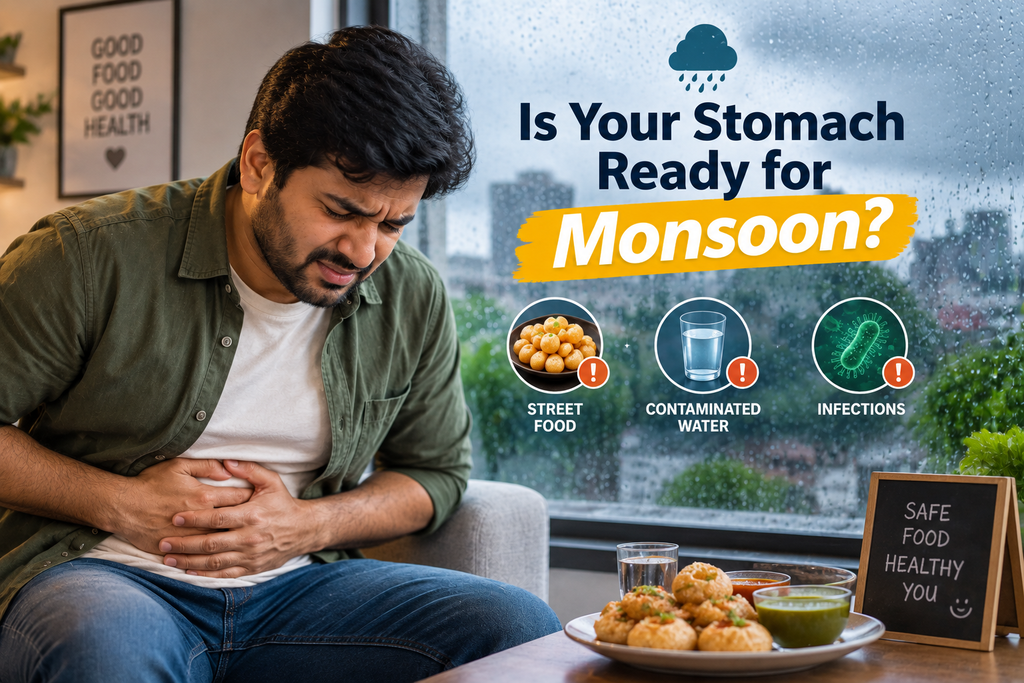
Table of Contents
Why Are Stomach Infections More Common During Monsoons?
The heavy rain may make sewage, drainage water, animal waste, and other pollutants mix with rainwater. This leads to the pollution of drinking water and areas from which we prepare our food. Such pollution leads to infections causing diarrhea and other gastrointestinal diseases.
The monsoon season also provides a favorable climate with respect to the growth of microorganisms. Contamination occurs with poor storage of food and holding cooked food at the wrong temperature for a long time.
Pollution may also take place due to ordinary human interaction with objects and substances. The polluted water and food may reach our hands, tools, kitchenware, and ready-to-eat food.
That is why gastrointestinal infection is common during monsoon season. The rain facilitates the contamination process. It can be reduced by providing proper hand hygiene and drinking water and by storing food correctly.
How Do Stomach Infections Spread During the Rainy Season?
There are several ways stomach infections can spread. You may eat or drink contaminated food or water. You may touch a contaminated surface and eat without washing your hands. Food can also become unsafe when it is not cooked, stored, or handled properly.
Common causes include:
| Source of infection | How contamination can happen |
| Drinking water | Sewage or floodwater contaminates water sources. |
| Food | Improper cooking, storage, or handling |
| Raw fruits and vegetables | Washed with contaminated water |
| Street food | Poor hand hygiene, unsafe water, or prolonged exposure |
| Floodwater | Comes into contact with food, utensils, or drinking-water sources |
| Hands and surfaces | Transfer germs from contaminated areas to food. |
The germs can be bacteria (e.g., E. coli, Salmonella, and Shigella), viruses (e.g., norovirus and rotavirus), or parasites (e.g., Giardia and Cryptosporidium). The exact cause is dependent on each infection.
So, don’t assume all episodes of stomach infections are identical or are treated the same.
What Symptoms Should You Watch For?
A stomach infection can cause a combination of digestive and general symptoms.
The common symptoms include:
- Loose or watery stools
- Stomach pain or cramps
- Nausea
- Vomiting
- Fever
- Weakness and tiredness
- Loss of appetite
Diarrhea is defined as having three or more loose or watery stools a day or passing stools more often than usual for you.
It is the severity and not the symptom that matters. If the loose motion does not become dehydrated, it can pass without extensive treatment by the family. If diarrhea and vomiting occur repeatedly, there can be significant fluid and electrolyte deficits, and this should be monitored.
The Biggest Risk Is Dehydration
Frequent loose stools or vomiting can make you lose a lot of water and essential electrolytes. This can lead to dehydration.
Watch for these early signs:
- Increased thirst
- Dry mouth
- Dark urine or passing urine less often
- Weakness
- Dizziness
- Headache
- Tiredness
Severe dehydration can cause extreme sleepiness, confusion or difficulty drinking. In such cases, you may need fluids through an IV.
Children can become dehydrated faster than adults. Take prompt medical advice if a child is unusually sleepy, drinking poorly, unable to drink, has sunken eyes or passes very little urine.
What Should You Do If You Have a Stomach Infection?
The first thing you should do if you have mild symptoms is to drink fluids.
Take ORS
Oral rehydration solution (ORS) helps replace the water and electrolytes lost through diarrhoea and vomiting. Take ORS in small, frequent sips. This is especially helpful if nausea makes it difficult to drink a large amount at once.
ORS plays an important role in the management of diarrhoea. The national diarrhoea-control programme in India also encourages the use of ORS and zinc supplementation for children (according to their age).
Continue eating
Do not stop eating during diarrhoea unless a doctor advises you to. If you can eat, choose simple, freshly prepared foods that are easy to digest.
Continue feeding children as usual. Keep breastfeeding normally if the child is breastfed.
Avoid unnecessary antibiotics
An antibiotic isn’t always necessary for stomach infections.
Some infections are caused by viruses and others may be caused by bacteria or parasites. It is not recommended that you take antibiotics without a doctor’s prescription since they do not prevent viruses.
If symptoms do not improve or persist, we suggest that you seek evaluation of the cause before initiating medicines.
When Should You See a Doctor for a Stomach Infection?
Seek medical attention if symptoms are severe, last for a long time or show warning signs. Most stomach infections improve with proper hydration and rest. But some symptoms need medical attention. See a doctor if you notice any of the following:
Blood in the stool
It can be a sign of an intestinal infection or another condition that needs medical attention. See a doctor if you notice blood in your stool.
Diarrhoea lasting more than three days
Diarrhoea after three days should be discussed with a doctor instead of being treated at home.
Frequent vomiting
Frequent vomiting can cause rapid fluid loss. If you vomit every time you drink, you can become dehydrated quickly.
High fever
If a fever has reached that exceeds 102°F (38.9°C) and gastrointestinal symptoms are present, medical attention should be sought.
Severe abdominal pain
Abdominal pain does not always mean that it is a stomach infection. Many other conditions of the abdomen can mimic these symptoms and may necessitate emergency evaluation.
Signs of dehydration
Important warning signs are very little urine, extreme thirst, severe weakness, dizziness, confusion or unusual drowsiness.
Who Should Be More Careful During Monsoon?
A mild stomach infection can be treated with plenty of fluids and rest for the majority of healthy adults. However, during the monsoon season, a few individuals should be more conscious of risks to dehydration, or to complications occurring more rapidly.
This includes:
- Young children
- Older adults
- People with compromised immune systems
- Individuals who are severely ill or have serious medical conditions
- People who develop severe vomiting or diarrhoea
If you or someone in these groups develops stomach infection symptoms, seek medical advice early. Do not wait for dehydration or other complications to develop.
Monsoon Food Safety: What We Recommend
It is better to prevent an infection than to suffer from dehydration after.
Here are some basic habits you should have at home during the monsoon.
- Drink safe water. Use properly treated or otherwise safe drinking water. If there is any doubt about contamination, take necessary measures to render the water safe before consumption.
- Use proper hand washing. Clean with soap before eating, making food, and after using the toilet.
- Follow the advice to consume fresh food. Do not use food that has been left out for long periods, particularly in hot and humid conditions.
- Separate raw and cooked foods. This helps to decrease the possibility of spreading microorganisms from raw foods to ready-to-eat food.
- Cook food thoroughly. Many microorganisms can be destroyed during cooking.
- Wash fruits/vegetables. Be sure to use safe water, especially for food that is consumed raw.
- Be careful with uncovered food. Don’t eat food that has come into contact with dust, insects, dirty surfaces or water that may be contaminated.
- Do not eat or drink any foods or water that have come into contact with flood water. Drinking water or food that has been contaminated by flood water should be discarded.
The habits are based on the 5 steps of safe food handling: Keep Food Areas Clean, Separate Raw & Cooked Food, Cook Thoroughly, Store Food at Safe Temperatures, and Use Safe Water & Raw Ingredients.
Is Every Case of Diarrhoea a Stomach Infection?
No.
Abdominal pain, vomiting and diarrhoea may happen due to a number of reasons. An infection can cause similar symptoms, as can food intolerance, medication side effects, or other gastrointestinal or abdominal conditions.
That is why it is important that the symptoms are persistent or severe enough to be evaluated properly.
We treat every stomach problem on its own merits at Harmony Hospital. If you have symptoms and medical history that suggest a cause for your condition, we may order tests to help determine that cause.
Monsoon Stomach Infection: A Quick Guide
| What you notice | What you should do |
| Mild loose motions and you can drink normally | Increase fluids and monitor your symptoms |
| Diarrhoea with significant fluid loss | Start ORS and focus on hydration |
| Repeated vomiting | Seek medical advice if you cannot keep fluids down |
| Blood in stool | See a doctor promptly |
| High fever with diarrhoea | Seek medical evaluation |
| Severe or worsening abdominal pain | Get medical attention |
| Signs of dehydration | Seek medical care |
| Diarrhoea lasting more than 3 days | Consult a doctor |
| Child drinking poorly or becoming unusually sleepy | Seek medical attention promptly |
How We Help With Stomach Infections at Harmony Hospital
A stomach infection may settle with simple care, but some cases need medical attention. Our experts at Harmony Hospital will thoroughly check on your condition and advise what should be done next.
The dehydration symptoms and any other symptoms that point at a dangerous infection or any other problems are checked. Additional examinations are recommended if required, and the treatment process is started.
In addition, we inform about whether you can get better at home or whether you should visit a doctor. It is our objective to give you the proper treatment in the proper time.
Do not wait for vomiting to continue, or until you have already become severely dehydrated. Getting medical advice from the start can avoid any potential complications.
During the monsoon season, consuming healthy foods, purified water and proper hand washing can prevent stomach infections. If the symptoms appear, the treatment can help you get well again.
The Bottom Line
Stomach infection can be avoided during monsoon. Consumption of safe drinking water and proper food preparation and hand washing will help keep this risk low.
In case of diarrhea and vomiting, you need to ensure that you maintain hydration and watch out for symptoms closely. In case there is blood in stool, abnormally watery stools, vomiting, high fever, pain in abdomen or dehydration, seek immediate medical help.
It is our aim at Harmony Hospital to make sure that you know what your symptoms mean and also get the proper care if necessary.
FAQs
Why are stomach infections common during monsoon?
Bacteria, viruses or parasites that can cause gastrointestinal infections can be spread more easily through heavy rain, flooding, contaminated water, humidity and/or poor food handling practices.
What are the most common symptoms of a stomach infection?
Diarrhoea, vomiting, nausea, stomach cramps and fever are common symptoms. If fluid loss is great, weakness can occur.
Can contaminated water cause stomach infections?
Yes. Microbial pathogens from human or animal faeces can be found in water supplies and can lead to diarrhoea and other gastrointestinal illnesses.
Should I take antibiotics for diarrhea?
No, without a doctor’s advice. It can be viral, bacterial or parasitic and antibiotics are not suitable for all infections.
Is ORS useful for stomach infections?
Yes. ORS helps to replace water and electrolytes that are lost because of diarrhoea and is one of the best ways to treat dehydration.