
Sudden drooping face, slurred speech or arm weakness may be alarming. But what if these symptoms disappear after a few minutes? Is the risk over?
Not necessarily. This might be a Transient Ischemic Attack (TIA) or “mini stroke. While it may go away without leaving a permanent mark on the brain, a TIA is a serious warning sign that if the stroke doesn’t resolve, another stroke could occur. Actually, a stroke risk is especially high in the first 48 hours following TIA.
It’s important to understand the difference between a TIA and stroke so that you can identify signs and symptoms and get to the doctor’s office in time before permanent damage is done. This blog describes the symptoms of TIA, what the difference is between a mini stroke and a stroke, who’s at risk and what they should do if they do get a mini stroke.
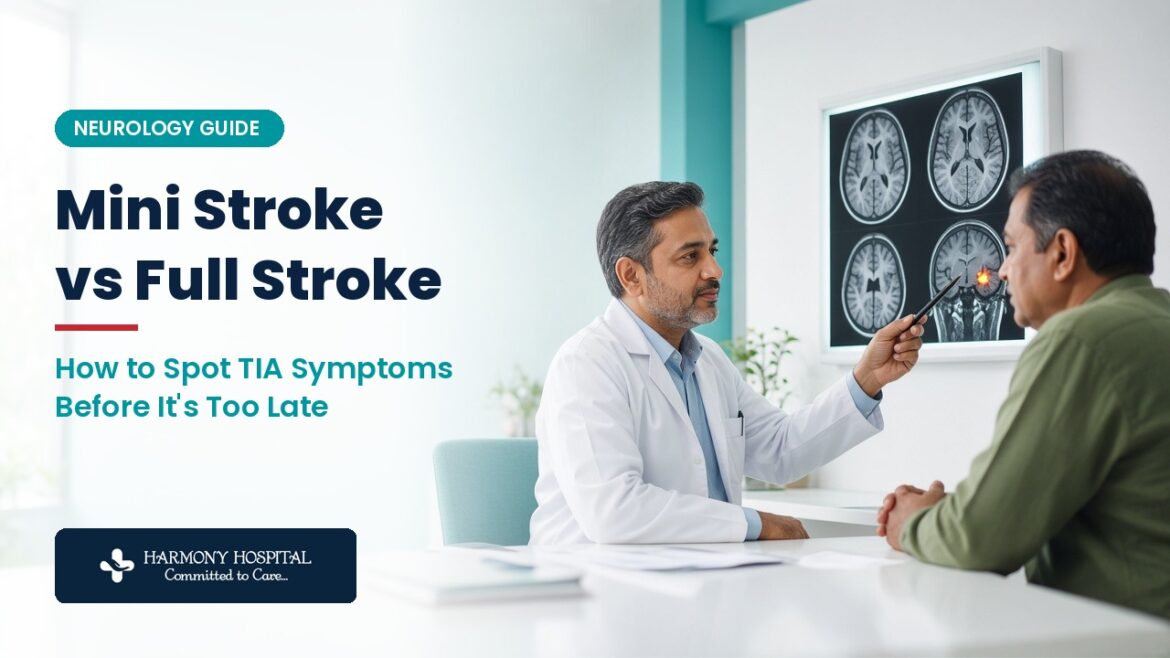
What Is a Mini Stroke (TIA)?
TIA (Transient Ischemic Attack) is a temporary interruption or decrease in the blood supply to part of the brain. During this period, the brain is deprived of sufficient oxygen and so has abrupt neurological changes.
A TIA is often referred to as a “mini stroke” because its symptoms are similar to a stroke. However, the blockage resolves, blood flow is restored and the symptoms disappear.
However, a TIA does not cause permanent damage to brain tissue on appropriate brain imaging (as does an ischemic stroke). This is significant because TIA symptoms that resolve in just a few minutes are not automatically diagnosed and may be due to a different cause. Sometimes, the symptoms of a stroke improve or get better.
It is important to understand that a TIA can never be thought of as a benign event, just because the individual feels fine. It may indicate an underlying problem with blood vessels or circulation that needs immediate medical attention.
Mini Stroke vs Full Stroke: What Is the Difference?
The difference in mini stroke versus full stroke is the effect on the brain tissue.
In a TIA, the blood supply is blocked for a short time, causing no permanent damage to the brain tissue. A stroke occurs when blood flow to the brain is disrupted or bleeding in the brain. This damage or death to brain cells occurs during a stroke.
Both of these conditions are emergency medical situations. The symptoms do not necessarily indicate which of the two is occurring.
Here is a comparison to understand the difference between TIA and stroke.
| Parameter | Mini Stroke (TIA) | Full Stroke |
| Cause | Temporary interruption of blood supply | Blockage or rupture of a blood vessel |
| Symptoms | Sudden stroke-like symptoms | Sudden stroke-like symptoms |
| Duration | Often minutes; may last longer | May persist or improve with treatment |
| Brain damage | No permanent tissue injury in a true TIA | Can cause permanent brain damage |
| Recovery | Symptoms resolve completely | Recovery depends on the extent of injury and treatment |
| Long-term effects | Usually no lasting neurological disability from the TIA itself | May cause paralysis, speech difficulties, memory problems or disability |
| Future risk | Warning sign of a possible stroke | Risk of another stroke may remain elevated |
An important thing to note: doctors can’t tell if an episode is a TIA or a stroke by waiting to see how long the symptoms last. Brain imaging and clinical evaluation are needed to establish the diagnosis.
Mini Stroke Symptoms: TIA Warning Signs You Should Recognise
The mini stroke symptoms TIA patients experience are almost identical to those of a full stroke. They generally appear suddenly and may disappear within minutes or hours. Recognising these symptoms early is important because even a brief episode can signal a serious problem with blood circulation to the brain.
Since mini strokes are serious events that require proper blood flow to the brain, early recognition of symptoms is crucial.
Be alert to the following signs:
Sudden drooping of the facial muscles: The face may droop suddenly, especially when smiling.
Numbness or weakness: Sudden weakness or numbness on one arm, leg or one side of the body.
Slurred speech: Speech may become slurred, and the person may have difficulty finding words and/or pronouncing the words.
Some trouble understanding speech: The person may not understand simple instructions or conversations.
Sudden vision problems: Sudden onset of blurred vision, double vision or loss of vision in one or both eyes.
Sudden dizziness, difficulty walking or poor coordination may be a sign of a neurological issue.
Usually severe headache without a known cause: This is an unusually severe headache without a known cause, especially in the case of a stroke.
These symptoms can go away rapidly, but they can be no less severe as a result. If these signs are present at any time, seek emergency medical help immediately if only one of these signs is present.
How to Recognise a Mini Stroke Using the BE FAST Method
The BE FAST method is one of the easiest ways to know stroke symptoms. It teaches you how to recognize common warning signs and when to call for emergency care.
The BE FAST Stroke Recognition Method
- Balance: Sudden loss of balance, coordination or difficulty walking.
- Eyes: Sudden blurred vision, double vision or loss of vision.
- Face: One side of the face droops or becomes difficult to move.
- Arms: One arm becomes weak or numb. The person may struggle to raise both arms.
- Speech: Speech becomes slurred, unclear or difficult to understand.
- Time: Seek emergency medical help immediately. Note when the symptoms started.
The BE FAST method is useful for identifying both TIA and full stroke symptoms. Do not wait for all the signs to appear before seeking help.
TIA vs Stroke: Which Is More Dangerous?
When comparing TIA vs stroke which is more dangerous, a full stroke is generally more immediately damaging because it can cause permanent injury to brain tissue.
A full stroke is typically more harmful straight away since it might cause lasting damage to the brain tissue. It can cause paralysis, difficulty speaking, memory loss or life-threatening complications depending on the extent and severity of the affected area.
But, a TIA is not a minor matter that can be taken lightly. It is a warning that the blood supply to the brain has already been cut off. The cause of it may still exist and there would be a higher chance of a further stroke occurring.
The risk of stroke in the first 90 days after a TIA can be as high as 17.8%, reports an American Heart Association scientific statement. Nearly half of these second-strokes happens within the initial 2 days.
That’s why doctors consider a suspected TIA a medical emergency. Early diagnosis and timely treatment may minimise the risk of a significant stroke.
What Causes a Mini Stroke?
A mini stroke is when blood flow is briefly blocked to an area of the brain. This is often due to a small blood clot in an artery that supplies blood to the brain.
The clot can break up and move away, and the blood flow can resume normally. But what may have caused the blockage could still be present.
There are several common causes and contributing factors, including:
Blood clots: Clots can develop in the heart or blood vessels and get carried to the arteries leading to the brain.
Narrowed arteries: A buildup of fatty deposits (atherosclerosis) can narrow the arteries and restrict blood flow.
Irregular heartbeat – Atrial fibrillation can lead to blood accumulating in the heart and clots developing in the blood, which can be passed to the brain.
High blood pressure – When blood pressure isn’t controlled, blood vessels are damaged, making it more likely to have a stroke or TIA.
Diabetes: When blood sugar is high, it can cause blood vessels to become damaged and lead to poor circulation.
High cholesterol: When levels of cholesterol are too high, it can lead to the formation of plaques in the arteries, which can cause blockages.
Other risk factors include smoking, obesity, lack of exercise, over-drinking alcohol, and a history of stroke or TIA.
Knowing about these risk factors is a crucial component of preventing another episode.
How Is a Mini Stroke Diagnosed?
The symptoms of a TIA may clear up before the patient reaches the hospital, making the diagnosis challenging. Unfortunately, if there are no symptoms at the time of the exam, it does not mean that all is well.
The doctor looks at the patient’s history, symptoms, neurological function, and possible causes.
The evaluation may involve:
Neurological examination: Assesses muscle strength, speech, vision, coordination, reflexes and sensation.
MRI brain: Can detect brain tissue damage. The use of diffusion-weighted MRI is especially valuable in the evaluation of suspected TIA.
CT scan: This is useful in determining if there is bleeding and other causes of neurological symptoms.
Blood vessel imaging: Doppler study of the blood vessels or computed tomography angiography (CT angiography) or magnetic resonance angiography (MR angiography) can help pinpoint narrowed or blocked blood vessels.
ECG: Examines the heart’s electrical activity and can help identify any irregular heart rhythms, like atrial fibrillation.
Blood tests: (These will help determine the level of blood sugar, cholesterol and other health markers that may play a role in the symptoms.)
The outcomes enable physicians to determine if it is a TIA, stroke or some other condition that might mimic a stroke. They also help define the risk of the patient’s recurrence.
What to Do After a Mini Stroke?
Even if symptoms of a mini stroke go away, it is important to seek medical care right away if a person or someone you know has symptoms of this condition.
The correct thing to do:
Get immediate medical attention: Do not delay treatment because symptoms are not returning. Contact 112 and/or 108 for emergency help and immediate referral to the hospital for assessment.
Record when symptoms began: Record the onset of symptoms (how long they have persisted since first appearance). The information aids in the diagnosis of the condition by a doctor.
Do not drive yourself: Seek emergency medical help, do not try to drive to the hospital without help.
Do not medicate without a doctor’s advice: Do not take aspirin or blood-thinning drugs without knowing that it is safe for you. The symptoms could be caused by a bleeding stroke, where such medication may be harmful.
Do recommended tests: If you are feeling totally well, go through the tests that your doctor suggests to discover the underlying cause.
Take the medicines as prescribed: These may be used to prevent blood clots or help with blood pressure or cholesterol, or for a procedure to treat a narrowed artery.
Prompt evaluation (within 24 hours of symptom onset) is necessary for a TIA. The risk of a second stroke can be greatly decreased with early treatment.
Can a Mini Stroke Be Prevented From Turning Into a Full Stroke?
A TIA is a warning sign, but does not guarantee a future stroke. The right medical evaluation and preventive measures can help reduce the risk.
The first step in prevention is to look at and treat the underlying cause of the TIA.
Some of these key measures are:
- Maintain healthy blood pressure: Take blood pressure regularly and stick to your treatment plan.
- Take care of diabetes: Maintain blood sugar levels in your doctor’s recommended range.
- Keep cholesterol levels healthy: Adhere to dietary guidelines, use prescribed drugs if necessary.
- Handle heart issues: Have such things as atrial fibrillation assessed and treated.
- Stop smoking: Smoking injures blood vessels and raises the risk of blood clots.
- Avoid sitting for extended periods: When sitting for long periods, keep moving to help heart health and circulation.
- Follow your neurologist’s advice: Go to regular appointments and take medication regularly.
If a patient has a TIA history, do not stop medication due to a patient feeling better. Preventive treatment may be critical to minimize the risk of a recurrence.
Why Early Stroke Evaluation Matters
Any episode that lasts just a few minutes and results in weakness in one arm, difficulty speaking or vision loss should be taken seriously when it comes to your brain. Someone who looks perfectly normal after a suspected mini stroke can actually have a condition that is causing the problem and may need treatment.
At Harmony Hospital, Ahmedabad, we understand the importance of timely neurological evaluation and the need to investigate symptoms before they lead to more serious complications.
Our experienced neurology team focuses on identifying the cause of neurological symptoms, evaluating stroke risk, and guiding patients towards appropriate treatment and follow-up care. We have 24×7 Emergency services to help patients reach the medical facility at the right time and at the right place.
Don’t shrug them off because they go away if you or a family member has had any symptoms of a mini stroke. Immediately seek medical evaluation.
Conclusion
If you are aware of the symptoms of TIA, know the difference between TIA and stroke, and go to the doctor promptly, you can help prevent a potentially life-threatening event. This is especially critical with the increasing awareness of brain stroke occurring in youth, as they may be unaware of the early warning signs or may think they are too young to be at risk.
Do not wait for the symptoms to reappear or presume that it is safe to resume because the symptoms have not returned.
The severity of warning signs doesn’t indicate if the mini stroke or stroke will be serious – it depends on the amount of brain tissue damage caused. While a TIA can lead to temporary symptoms that cause no permanent brain damage, they are an indication that blood flow is impaired and needs to be addressed immediately.
An early diagnosis of TIA’s symptoms, knowing the difference between TIA and stroke, and prompt medical treatment can prevent a life-threatening event. Do not wait until symptoms return or assume that if they go away, so does the risk of recovery.
A mini stroke is your brain’s warning. Don’t take it lightly or it will become a full stroke.
Meet the Neurology and Neurosurgery Team at Harmony Hospital
Stroke care requires prompt medical attention, accurate diagnosis, and the guidance of experienced specialists. Our neurology and neurosurgery team works towards identifying neurological conditions and helping patients access appropriate medical and surgical care.
Dr. Jaydeep Mangroliya
Epilepsy and Neuro-Cognition Specialist
- MBBS, MD (Medicine), DM (Neurology)
- 12 years of experience
Dr. Jatin Lathiya
Neurologist | Stroke and Headache Specialist
- DNB (Neurology)
- 5+ years of experience
Dr. Piyush Patel
Neurosurgery Specialist
- MS, MCh (Neurosurgery)
- 15 years of experience
Our experts specialize in neurology, stroke care, and neurosurgery and help our patients at every point of neurological evaluation and treatment. When stroke symptoms suddenly occur, get emergency medical help immediately. The results of treatment can be significantly affected by early intervention.
FAQs:
How long does a mini stroke last?
A mini stroke could last for a few minutes or hours. In a true TIA, symptoms completely resolve, but even if they do last for a short period, it’s important to get immediate medical attention.
Can a mini stroke cause permanent brain damage?
A true TIA will not result in permanent brain injury. Symptoms that clear up, however, may sometimes be the result of an actual stroke, and may have permanent effects.
Can a mini stroke happen without facial drooping?
Yes. Sudden weakness, numbness, speech trouble, vision trouble, or trouble with balance without facial droop means you’ve had a mini stroke.
Can a mini stroke lead to a full stroke?
Yes. A TIA makes someone more likely to have another stroke, especially in the first 48 hours. This risk can be minimized through prompt assessment and prevention measures.
Can a mini stroke happen in young adults?
Yes. While age is a risk factor, younger adults may also have TIAs caused by heart disease, blood clots, diabetes, high blood pressure or some blood vessel abnormalities.